
1,000 Days Since Oct 7 in Pictures
 02.07.26
 0
0
A 1,000 days ago, Israel awoke to the sound of sirens and terror. Terrorists murdered men, women, children and babies in their homes, kidnapped partygoers and terrorized the communities of the Western Negev.
That day, the October 7 Massacre changed the operational reality of the region. Since terrorists from Gaza commenced the attack on Israel, the IDF has begun ground, aerial and naval operations to ensure that history will not repeat itself.
This is the story of the war, told through five chosen photos of five different moments throughout the past 1,000 days:
Gaza: Dismantling Hamas' Terror Infrastructure
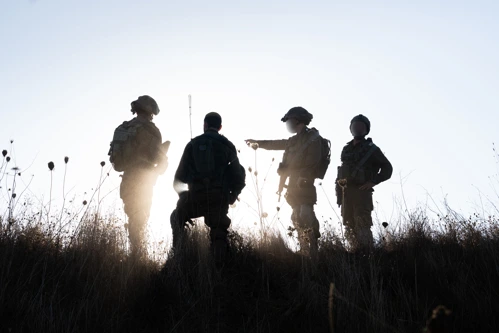
IDF troops in Gaza
The October 7 Massacre proved to the world that Hamas’ threat had to be dealt with. What followed was a two-year long operation in Gaza, in which the IDF revealed the extent of Hamas’ terror network.
Weapons and underground tunnels were found in and beneath schools, mosques, hospitals and UNRWA facilities. Hamas did it on purpose, using the civilian population in Gaza as human shields for its terror infrastructure. This made for a complex environment for the IDF to navigate while fighting to protect Israeli civilians.
During the operation, the IDF eliminated Yahya Sinwar, Hamas’ military leader, and three of his successors:
Almost all of the masterminds behind the massacre have been eliminated, alongside thousands of Hamas terrorists, including those who infiltrated Israel on October 7.
Following the ceasefire signed in October 2025, the IDF has been operating along the Yellow Line in Gaza, in order to protect southern Israeli communities and ensure Hamas does not rebuild its terror capabilities.
Lebanon: Countering Hezbollah's Threat
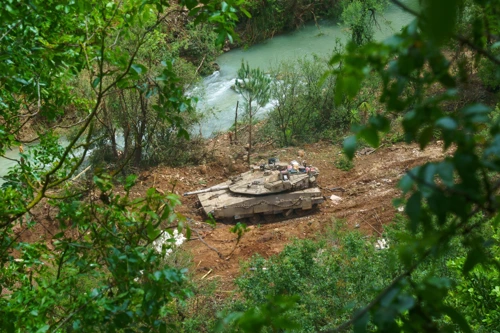
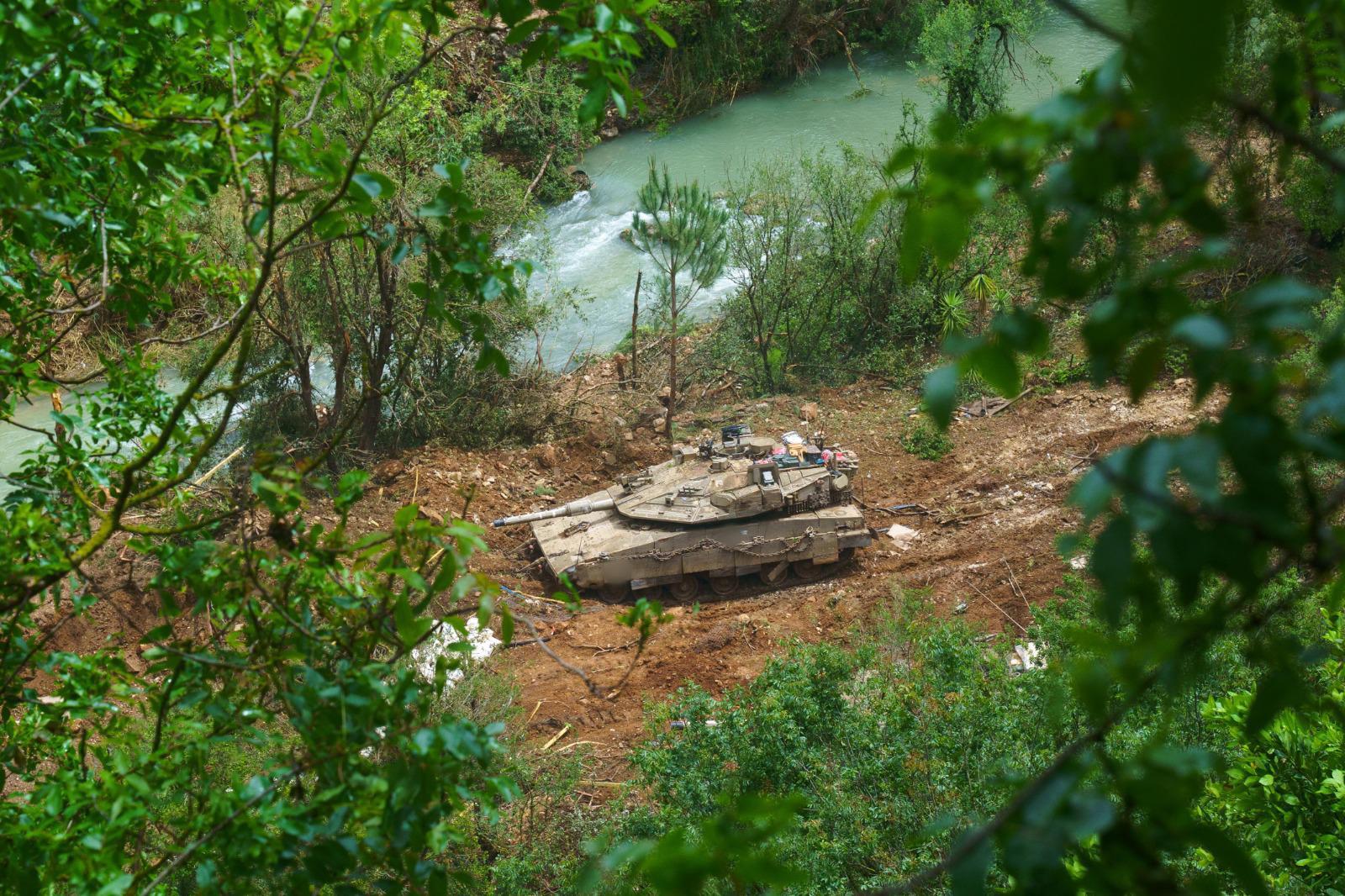
IDF Merkava tank near the Litani
Only a day after the brutal massacre in southern Israel, Hezbollah joined Hamas in the war against Israel and began its assault on northern Israeli communities with missile barrages and weaponized drones.
It has since been revealed that Hezbollah terrorists had planned an invasion of northern Israel, using military strongholds disguised in civilian areas. This plan was dubbed as operation ‘Conquer the Galilee’ - further showcasing Hezbollah’s commitment to terrorise Israeli civilians and violate UN Resolution 1701.
Throughout the war, the IDF launched multiple campaigns to degrade Hezbollah’s capabilities and rid southern Lebanon of its threat.
Operation ‘Northern Arrows’, which commenced September 2024, marked a significant shift for Hezbollah. In a daring operation, Hassan Nasrallah, Hezbollah’s leader of over 30 years, was eliminated. Additionally, approximately 12,500 Hezbollah targets were struck across Lebanon. On November 26, 2024, the Israel-Lebanon ceasefire was signed, though Hezbollah did not respect its terms, and worked to rebuild its terror capabilities.
On the third day of operation ‘Roaring Lion’ on March 2nd, Hezbollah joined the Iranian regime’s war on Israel. During the operation, the IDF eliminated hundreds of terrorists, dismantled dozens of kilometers of terror tunnels, and struck various military targets. The IDF also took operational control of a central Hezbollah military stronghold, the Beaufort Ridge.
The IDF is currently operating in the Security Zone in southern Lebanon in order to ensure the safety of northern Israeli Communities and prevent further terror attacks toward IDF troops, in accordance with the ceasefire agreement.
Returning the Hostages Home
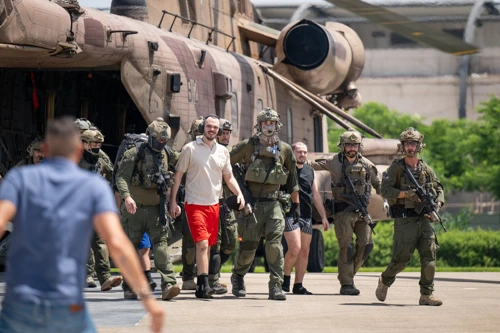
Hostages Andrey and Almong returning home
251 men, women and children were taken hostage into Gaza 1,000 days ago. Testimonies reveal the extent of Hamas and other terror organizations’ cruelty—our hostages were held in underground tunnels, isolated from the world, or in houses in the middle of packed civilian neighborhoods.
They were tortured, assaulted, and deprived of the most basic human needs. Occasionally, their terrorist captors would post videos of them, cuffed and bruised, to inflict further mental distress on them and their families.
One of the IDF’s main operational goals in Gaza was to return all of the hostages home, including the four additional hostages held in Gaza from before October 7, 2023. The first rescue operation took place three weeks after the October 7 Massacre, when Private Ori Megidish was rescued from Hamas captivity.
Additional rescue operations include:
- Operation ‘Golden Hand’, in which Fernando Simon Marman and Louis Har were rescued from captivity in Rafah, on February 12, 2024.
- Operation ‘Arnon’, named after police Yamam fighter Arnon Zamora, who fell in combat in order to rescue hostages and bring them back home. Almog Meir Jan, Andrey Kozlov, Shlomi Ziv and Noa Argamani were rescued that day from captivity in the Nuseirat refugee camp.
- Operation ‘Courageous Hearts’, in which the body of the last hostage who remained in Gaza, Sergeant First Class Ran Gvili, was recovered from a cemetery in northern Gaza on January 26, 2026. His return marked the return of all hostages to Israel.
Though it was a condition of the ceasefire, Hamas did not cooperate with the IDF’s efforts to find hostages, and withheld information regarding their accurate location.
The Iranian Terror Threat - IAF During the War
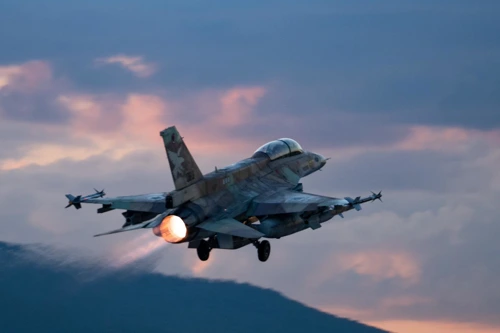
IDF jet taking off to strike in Iran
The Iranian regime’s proxies, such as Hamas and Hezbollah, have posed a threat to the civilians of Israel for years and launched countless terror attacks—all with the regime’s funding and training. Alongside the Iranian regime’s nuclear arsenal, which threatens the entire region, the regime has posed a significant threat to Israel for over 50 years.
On June 12, 2025, the IDF launched a historic operation titled ‘Rising Lion’, and caused significant damage to the regime’s nuclear, missile and other terror capabilities meant to harm Israeli civilians.
This year, on February 28, in cooperation with the U.S. Army, the IDF launched operation ‘Roaring Lion’ with its largest military flyover yet. Ali Khamenei, Iran’s supreme leader and head of the terror axis was eliminated, alongside 39 other key terror figures. The operation further degraded the regime’s terror capabilities, especially infrastructure the regime had attempted to re-establish.
The operations against the Iranian regime showcase only a small part of the Israeli Air Force’s achievements during the war. They have operated on several fronts and greatly assisted IDF ground troops.
Naval Operations During the War
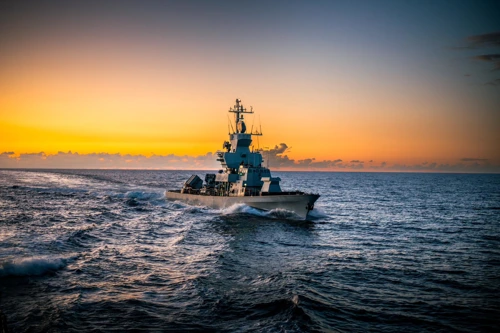
Israeli Navy vessel at sea
Many of the IDF’s operations were enabled due to the Israeli Navy, which dismantled and struck terror targets in various arenas. Additionally, the Navy’s missile boats intercepted aerial threats directed towards Israel.
In Lebanon, the Navy eliminated Hajj Yusuf Ismail Hashem, Hezbollah’s Southern Front Commander, and dozens of other terrorists. It also struck multiple terror targets including weapons storage facilities, observation posts and command centers.
In Gaza, the Navy maintains the Maritime Security Blockade, imposed to prevent Hamas from rebuilding its military capabilities. The Navy prevented infiltration attempts, while also striking Hamas targets.
At the end of 1,000 days of operations, the IDF has achieved historic milestones across all arenas, significantly degrading and dismantling terrorist organizations throughout the region. The IDF will continue to act to protect the safety of its civilians in any arena, whenever necessary.
Frequently Asked Questions
Q: What changed after the October 7 Massacre?
A: The attack led to military operations across seven different arenas, including ground, aerial and naval campaigns intended to prevent similar attacks in the future.
Q: What role did hostage rescue operations play during the war?
A: Returning the hostages was a central objective. Multiple rescue and recovery operations were conducted until all hostages were returned to Israel.
Q: How did the war expand beyond Gaza?
A: Operations extended to Lebanon against Hezbollah, to Iran against military and nuclear-related targets and across additional arenas supported by the Israeli Air Force and Israeli Navy.
Q: What role did the Israeli Navy play during the war?
A: The Navy intercepted aerial threats, enforced the maritime security blockade around Gaza and conducted strikes against terrorist infrastructure in Lebanon and Gaza.
