
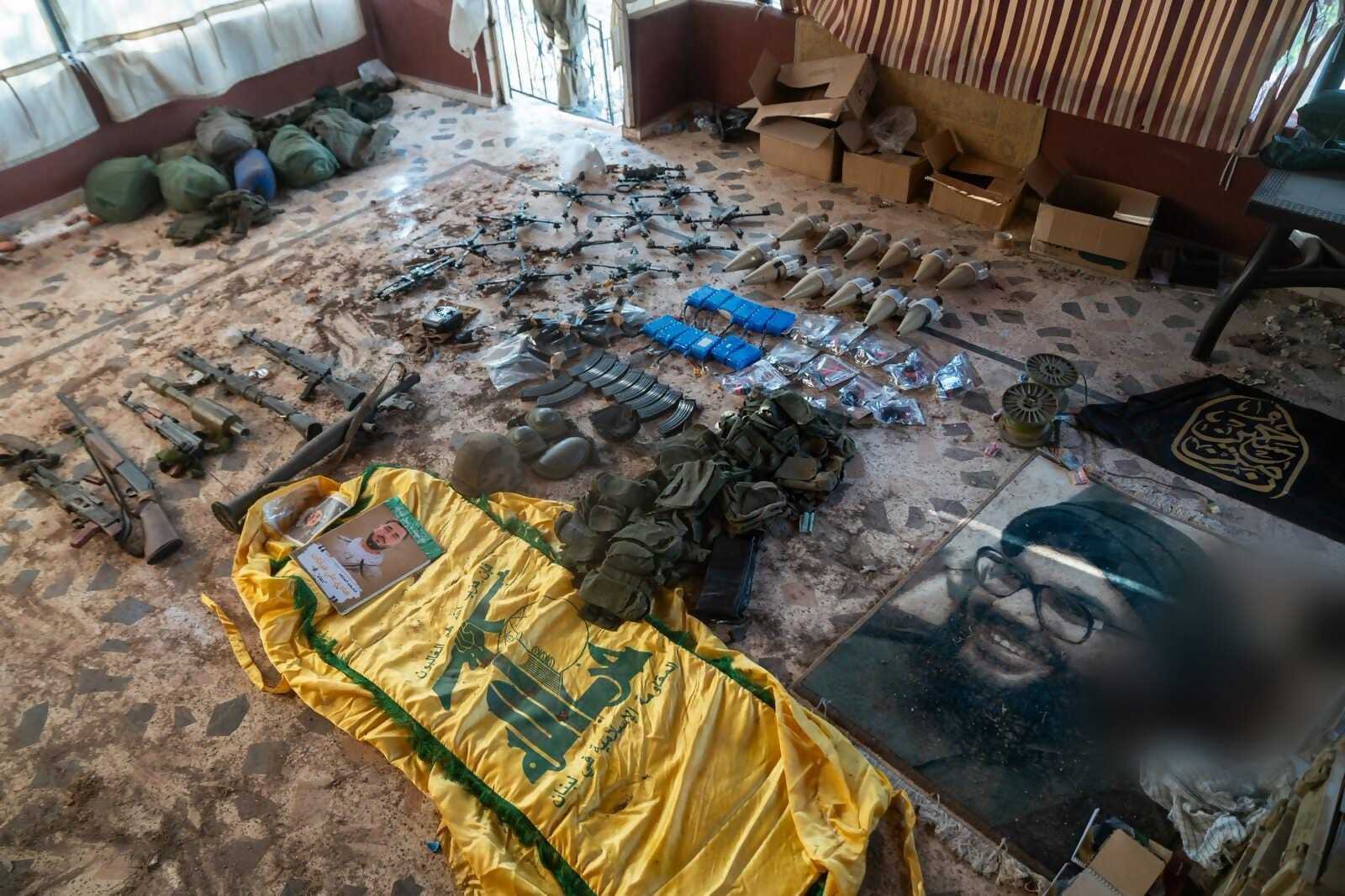
Weapons Found in Homes and Churches: Hezbollah’s Unlawful Tactics in Southern Lebanon
 21.11.26
 0
To learn more about the war on the northern front, click here.
The war on Israel’s northern front is close to home. Villages where Hezbollah operates and stores weapons, and where terrorists pose a threat to Israeli civilians, are situated just a few kilometers from Metula, Israel’s northernmost community. “The threat is a few meters away from our homes and from our schools, we don’t have much time to push the terrorists back if they were to get close,” began Major E., the liaison officer of the 91st Division, which operates along the Israel-Lebanon border.
‘IDF: Mission Brief’ episode - 'Inside Southern Lebanon: The Ongoing Threat of Hezbollah'
“Nowadays, we have a lot of ‘players’ inside Lebanon. I am in charge of communications with UNIFIL, which is a UN organization that is supposed to keep the peace in the area.” However, as has become apparent over the last three years, UNIFIL has failed in its role of neutralizing Hezbollah’s terrorist activity along the Israel-Lebanon border. For example, IDF troops recently located a civilian home containing a weapons stockpile situated roughly 200 meters from a UN post in the area of Meiss El Jabal.
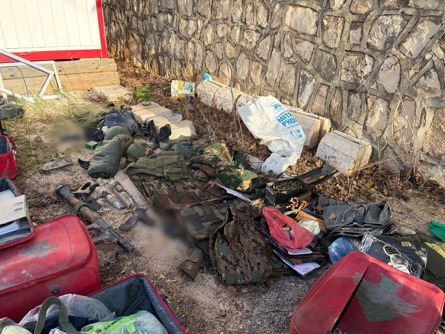
Weapons located near a UN post
When Hezbollah launched its war against Israel on October 8, a day after the Hamas invasion during the October 7 Massacre, an era of twenty years of relative peace came to an end. Israeli communities were assaulted with missile barrages and weaponized drones. “We had no choice but to go into villages in southern Lebanon where Hezbollah was hiding and find their weapons and operatives, in order to protect Israeli communities.”
In retrospect, it was discovered that Hezbollah had planned on executing an October 7-style plan: ‘Conquer the Galilee’. It consisted of three waves of 7,000 Radwan commando troops who were meant to invade, infiltrate and conquer northern communities while murdering and kidnapping civilians.
Hezbollah prepared for this plan by establishing military strongholds near the border, in direct violation of Council Resolution 1701, adopted after the 2006 Israel-Lebanon War, which prohibits certain military activity near the border and calls for the disarmament of armed groups in Lebanon.
Currently, Hezbollah continues to threaten Israeli civilians. “We see Hezbollah rearming and preparing for the next war. This time, we will be there to defend and to create a buffer between our civilians and the enemy itself.”
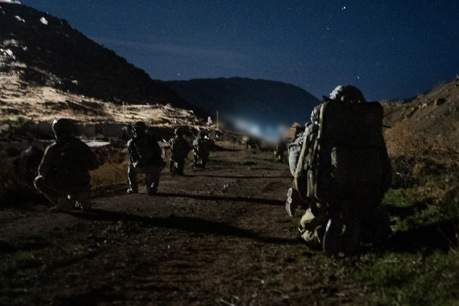
IDF troops in southern Lebanon
Hezbollah’s Use of Civilians to Disguise Terror
In southern Lebanon, terrorists blend in with civilians and disguise themselves as villagers or conceal themselves within humanitarian convoys. “Therefore the enemy, us, will not understand who’s an operative of Hezbollah or a natural civilian in the area. We see this not only with Hezbollah, but also with Hamas. This seems to be the tactic that the terrorists use the most to operate against us.”
This operational reality is carefully crafted for an age of social media and sensationalized headlines. “They don’t need to win a specific battle on the ground, they just need us to operate on those areas and make sure to publish it in a way that we will lose the battle. That’s what they’re seeking.”
“It’s classic guerrilla warfare. They also use tactics like dispersing their weapons across southern Lebanon. It is very hard to fight an enemy that hides in tunnels underground, in homes, in churches, and in mosques.”
Hezbollah Tunnel Uncovered Near a Church in Southern Lebanon
Prominently, Hezbollah even uses children’s bedrooms as makeshift weapons storage facilities. “We found rooms with Hezbollah posters on the wall and weapons under the bed. You would think that's not the best place to store weapons. Well, in fact, in Hezbollah’s eyes, that’s the perfect place to put them.”
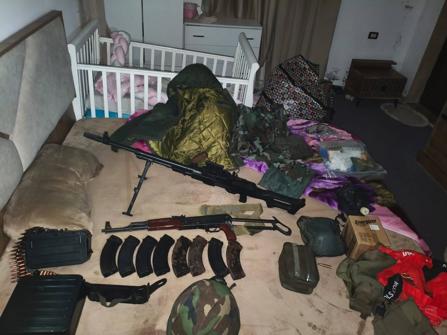
Weapons found near a baby’s crib in southern Lebanon
Often, Hezbollah terrorists come into villages and take what they want by force. Hezbollah tells the civilians they will give them money or other aid, in exchange for their allegiance. “That comes at the cost of the terrorists putting ten anti-tank missiles in their child’s bedroom. And if they don’t listen to the terrorists, their lives might be at risk.”
This tactic prevents IDF troops from dismantling infrastructure used to store weapons. It is also far harder to find and neutralize all of the dispersed weapons in one go. To enforce this and further exert control over the civilian population, Hezbollah assigns a ‘logistics officer’ to every village. His job is to go from house to house and check that the quantity of weapons stored inside each house remains unchanged. “They operate the villages as their own compound. And if something is not there, they might pay with their lives for it.”
“People like to spread the idea that the IDF is out to destroy and dismantle everything in its sight, and it’s not true. We operate when we find terrorist infrastructure in specific areas,” Major E. explained. These operations are based on precise intelligence identifying specific buildings or even rooms.
Even in the villages not infected by Hezbollah, the Lebanese government is failing. “Lebanon is not taking practical action, and that’s just another void that we as the IDF find ourselves filling. The civilians are looking for answers. We are starting to create a way, by liaisoning a convoy of humanitarian aid, to allow them to live their lives on a daily basis like they were used to.”
He emphasized that “the Lebanese Armed Forces and the Lebanese people are not our enemy. Our enemy is whoever declares they want to control and conquer Israel, and kill our communities.”
“We’re working on a framework that will allow us to defend our communities, but I think it’s a little bit too slow. You would expect a country to want to push forward. Sadly, we’re not seeing it happen, at least not in the way we would have thought.”
The Future Generation of Southern Lebanon
Hezbollah doesn’t operate exclusively as a military organization and intends to take over every aspect of life in southern Lebanon. “It sees itself as the government of the Shia. It will build schools and medical infrastructure after implementing weapons in villages. The ‘school’, which also doubles as weapons storage facility, will then influence the young children to be the next Hezbollah operative, the next logistics officer that goes inside the village.
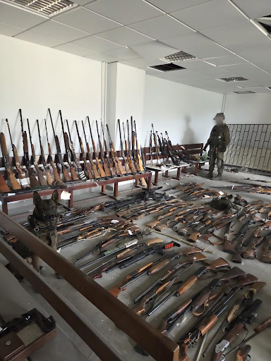
Weapons located in a school in the area of Bint Jbeil
“In a school in Al-Khiyam, for example, we found an amount of ammunition and weapons that I can compare to a tier 2 unit in the IDF. It’s mind-boggling. It’s hard to picture. You don’t expect to go into a school, go downstairs, and find an arsenal of weapons. It could be dangerous for them.”
Looking to the future, the IDF is addressing the threat to Israel by changing the approach to the security of civilians. “The first step is, if there’s an enemy who’s even starting to try and create some kind of operation, we will cut it right from the roots. Secondly, we’re creating layers of defense which start from our border forward. These layers assure that if, for example, there is some sort of infiltration, the infiltration is inside our outposts in front of soldiers, and not civilians.
“Although we are seeking a lot of options and a lot of solutions through diplomacy, the hand is on the trigger. We’re all ready. Our soldiers are in the field waiting 24/7, and I’m not jealous of the enemy if it will try us.”
Frequently Asked Questions
Where does Hezbollah hide weapons in southern Lebanon?
Hezbollah weapons have been found in civilian homes, children's bedrooms, schools, churches, and underground tunnels. Weapons stockpiles have also been located near UNIFIL positions.
What was Hezbollah's "Conquer the Galilee" plan?
It was a plan to infiltrate and conquer northern Israeli communities using Radwan Commando Forces. The plan aimed to murder and kidnap civilians.
How does Hezbollah use civilian communities to store weapons?
Hezbollah stores weapons in homes and other civilian infrastructure. There are village-level logistics officers who inspect homes and keep a close watch on the population to ensure civilians remain under Hezbollah’s control.
What is UNIFIL's role along the Israel-Lebanon border?
UNIFIL is a United Nations organization tasked with maintaining peace in the area, established in 2006 following the UN 1701 Resolution.
How is the IDF working to protect northern Israeli communities?
The IDF is deploying a layered defensive approach designed to prevent infiltrations from reaching civilian communities. It also aims to disrupt emerging threats and coordinate with the Lebanese Armed Forces to address Hezbollah's military infrastructure.
