
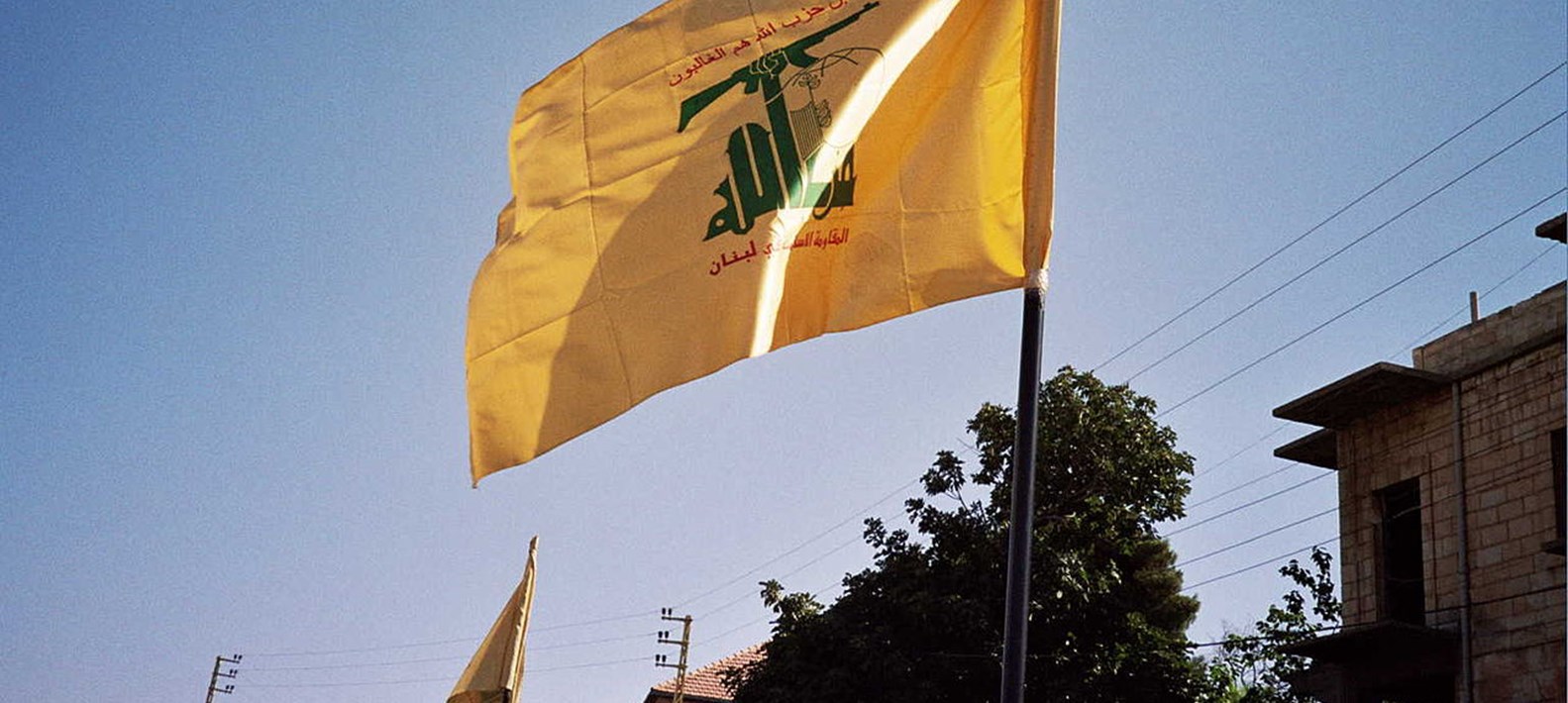
What Makes Hezbollah a Terror Organization?
 24.01.18
 0
0
The United States of America, United Kingdom, Germany, the Arab League and Israel are among a growing number of countries that recognize Hezbollah in its entirety as a terrorist organization. By contrast, the European Union has thus far only designated Hezbollah's military wing as a terrorist organization, a decision that was undertaken in 2013 in the aftermath of the attack on a tourist bus outside the Burgas airport in Bulgaria in 2012.
Within the organization, the network isn’t differentiated. Naim Qassem, Deputy Secretary General of Hezbollah, publicly stated that “in Lebanon, there is one Hezbollah, named Hezbollah. We don’t have a military and a political wing.”
In practice, Hezbollah's military and political wings work in tandem to advance the organization's terrorist agenda, with a distinction that is purely nominal. Indeed, Hezbollah's various bodies act as an interrelated network designed to support the organization's operational aims in Lebanon, Syria, Israel and other countries abroad. Proof of this dynamic can be found in at least three dimensions.
On the policy-making level, many Hezbollah officials function in both military and political roles. The Shura Council, Hezbollah's highest decision-making body, is made up of representatives of the organization's military, political and social institutions. The Shura Council is responsible for policy formulation and decision making regarding all aspects of Hezbollah's activities, military included. Another recent demonstration of this phenomenon is the active participation of Hashem Safieddine, head of the Executive Council, at Hezbollah's military parade in al-Qusayr in November 2016.
On the organizational level, numerous seemingly innocuous social and political institutions serve as conduits for terrorist activity. A prime example of this is the Foreign Relations Department (FRD), with Sheikh Ali Damush – who was recently included on the terrorist watch list – at its helm. Officially, this body is responsible for maintaining relations between Hezbollah and the Lebanese-Shiite Diaspora. However, due to the designation of the External Security Organization (ESO) and strict international monitoring of its activities, the FRD plays a crucial role in supporting and promoting Hezbollah's terror activities abroad through recruitment, funding and dissemination of propaganda.
On a financial level, Hezbollah uses its social and political institutions in Lebanon, as well as the large Lebanese diaspora, to funnel money to fund the organization's military activities. Apart from institutions, Hezbollah's activities are also financed by businessmen. For example, in December 2019, the U.S. Department of Treasury designated Lebanese businessmen Nazem Ahmad and Saleh Assi for “years of illegitimate business activity to gather and funnel illicit proceeds to Hezbollah.”
The IDF remains committed to protecting Israeli civilians from the threat of Hezbollah and all terror organizations.
Frequently Asked Questions
Q: Which countries recognize Hezbollah as a terrorist organization?
A: The United States, United Kingdom, Germany, Israel, and others recognize Hezbollah as a terrorist organization.
Q: Does the European Union designate all of Hezbollah as a terrorist organization?
A: The European Union currently designates Hezbollah’s military wing rather than the entire organization.
Q: Does Hezbollah separate its political and military wings?
A: Hezbollah officials publicly stated that the organization does not distinguish between political and military wings.
Q: What is Hezbollah’s Shura Council?
A: The Shura Council is Hezbollah’s highest decision-making body responsible for military, political, and social policy.
Q: How does Hezbollah finance its activities?
A: Hezbollah uses institutions, diaspora networks, and affiliated businessmen to support its operations financially.
