
Behind the Elimination of Hezbollah's Chief of Staff
What began as a routine day quickly turned into a one-time opportunity. After continuous monitoring and intelligence gathering, within about an hour, the most important figure in Hezbollah was eliminated. A behind-the-scenes look at Military Intelligence reveals the efforts that led to the operation, and the moment when footage from a visual-intelligence platform appeared on the command center’s screens, instantly becoming historic documentation.
 03.12.25
 0
0
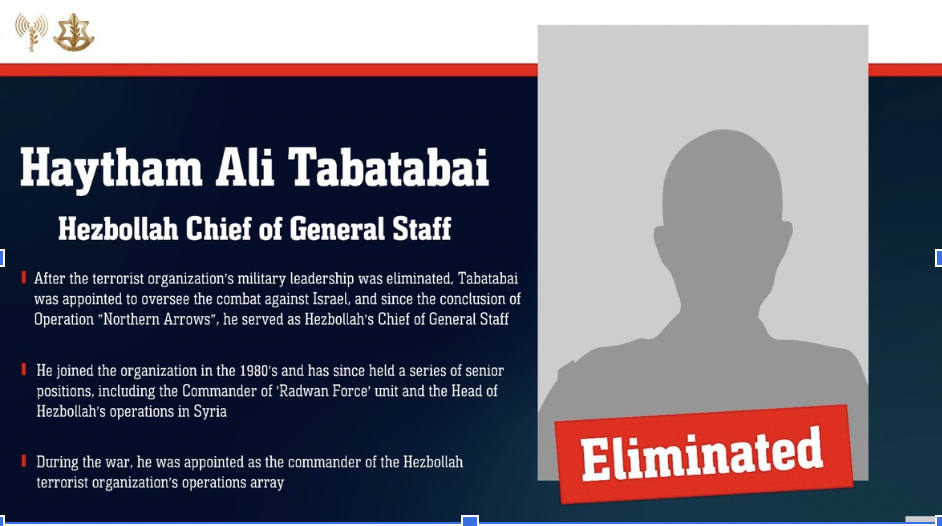
In recent months, Intelligence Directorate soldiers closely monitoring Hezbollah Chief of Staff, Haitham Ali Tabatabai, had given him a shorthand nickname: ‘Tabataba’.
But before delving into the steps that led to his assassination last week in the Beirut area, let's get to know the target.
Tabatabai joined Hezbollah in the 1980s and was a key figure in the terrorist organization. He held a number of senior positions, including commander of the Radwan Force and commander of the operations division. Tabatabai was working to rebuild Hezbollah's terrorist infrastructure and armaments across Israel’s northern border, and was directly responsible for strengthening Hezbollah’s weapons capacity to operate against Israel.
After the ceasefire and implementation of the understanding between Israel and Hezbollah, and after the elimination of Hassan Nasrallah, he was appointed Hezbollah Chief of Staff: a position he held for a year, until he was eliminated.
Tabatabai was one of Hezbollah’s driving forces behind the terror groups’ daily attempts to re-inflict harm on Israeli civilians, despite the ongoing ceasefire. Operating within Lebanon’s busiest civilian center and its capital, Beirut, Tabatabai shielded himself under a non-combatant population until his elimination.
Tabatabai is also the same senior terrorist who stood behind Hezbollah’s “Conquer the Galilee" plan to conduct another October 7th Massacre in Israel's North.
Gathering information on him—a figure so senior and long-standing—spanned a significant period of time. "In the Intelligence Directorate, we have been collecting information about ‘Tabataba’ for decades," says SSGT L., Field Intelligence Officer in the Lebanon area, "and since he was appointed Chief of Staff, we have been working even harder on his elimination plan, ensuring that a certain and precise hit is carried out, with as little collateral damage as possible."
"During the entire war," describes Lt. Col. Y., head of Hezbollah research in Lebanon, "he was always a figure who stood out to us, and along the way he also received promotions that strengthened his status until he reached the rank of Chief of Staff. We, of course, followed his progress, and when he climbed to number 2 in the organization, it made him a significant and serious target."
“What we do as a matter of routine is hold Hezbollah under constant observation. In every single detail. This gives us the ability to map their capabilities in depth. Before every interception, we map out the people who could replace the target in his role, how they would change the situation on the ground, who poses a potential threat, and what the enemy’s plans are. We then relay all of this upward, to the senior echelons.”
“It’s important to understand,” notes SSGT. L., “Tabatabai was truly a very hawkish figure: He worked to strengthen and rebuild Hezbollah, and he tried to restore units to full combat readiness against Israel. Naturally, he was a major center of knowledge and power. There were additional attempts to target him back then, during the Northern Arrows operation, but they didn’t succeed. It’s difficult to find the right timing for such precise operations.”
The precise timing became even more complicated once the ceasefire agreement went into effect. “This is exactly where we come in—identifying dangerous individuals who violate the agreement, and stopping them,” emphasizes Lt. Col. Y., "and this is truly one of our biggest challenges: trying to understand the intentions of the terrorist organization. Will it initiate force? How is it cooperating with other enemies? And what role is it playing inside Lebanon? Then we must present the political leadership with the most accurate picture possible.”
But finally, the perfect moment was found. “It started as just another day, and suddenly we saw signs of an operational opportunity. From there, everything happened very quickly. From the moment we realized we could go for it, through the approval channels that were sent to the political leadership, and until the Air Force dropped the ordinance—the whole process took about an hour.”
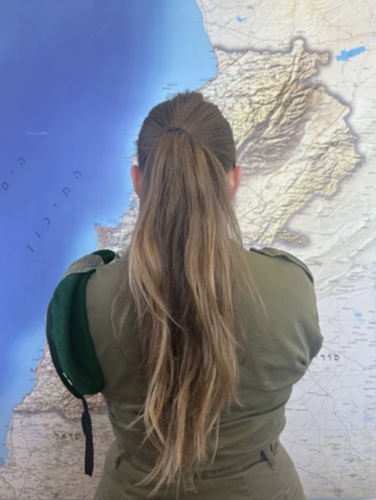
SSGT. L.’s role in the unit was to allocate intelligence-gathering resources in coordination with the Air Force and the Operations Directorate. “In this case, it was primarily aerial collection and assigning collection platforms, which required me to direct assets in the field to gather visual intelligence, something that ultimately helped achieve a definite incrimination,” she describes.
"That day, the footage from the vehicle I diverted was also distributed in the media," says Sergeant L., and the excitement is evident in her voice. "It was amazing to see the video on our screens, and a few hours later on all the news. I feel like I took part in something big, a real mission."
But even after the successful elimination, the work does not stop. "The next day, we were already on high alert in the command center, examining options for a possible response from Hezbollah," the commander emphasizes. "We have not returned to routine: We are on high alert, and are acting in accordance with the enemy's behavior. This is an enforcement effort, to ensure the understandings of the ceasefire between Israel and Lebanon are being upheld. In the end, our goal is to protect the residents of the north, so that they can live in safety and stability, not in fear."
"Behind this operation are a lot of soldiers, both in active and reserve duty, who work around the clock. We piece together a puzzle of a million parts, and in the end, that’s what brings success and precision. We continue to learn and question ourselves, and ask difficult questions all the time. The fight against Hezbollah is a marathon that has been going on for years. I myself live in the north," shares the commander, "and this is my way of protecting my home, even if I do it from Tel Aviv.”
