
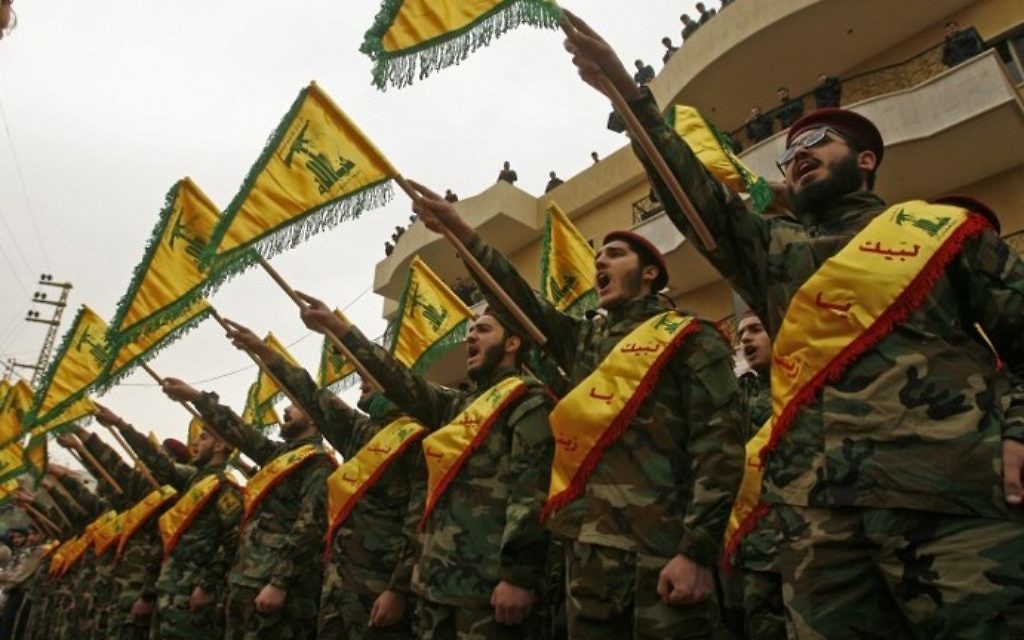
Hezbollah Establishes a Terror Cell in Syria
 13.03.19
 0
0
This article is outdated. For more recent info on the war on the northern front, click here.
Hezbollah began its covert involvement in Syria in 2012 when its operatives participated in major battles in the war in Syria, including the Battle of Aleppo, the Battle of al-Qusayr, the Battle of Zabadani, the Siege of Homs, and more.
Their involvement was both to aid Assad's regime and to gain firsthand experience in order to better prepare themselves in their mission to attack Israel.
Now, Hezbollah's seven-year-long involvement in Syria has taken a new form with the "Golan Terror Network," an outpost where Hezbollah operatives collaborate to gather intelligence on the IDF and Israeli civilians.
It has been exposed that the leader of the Golan Terror Network is Ali Musa Daqduq, a senior Hezbollah operative. Daqduq, a member of Hezbollah since 1983, held multiple Hezbollah leadership positions, including as the commander of a Hezbollah special forces unit and as the head of security for Hezbollah Secretary-General, Hassan Nasrallah.
As a Hezbollah operative, Daqduq spent years outside of Lebanon, engaged in training, planning, and orchestrating terror attacks. In 2006, Daqduq traveled to Iran to receive instructions and training from the commander of the Iranian Quds Forces, Qassem Suleimani. Then, he was sent to Iraq to head Hezbollah's terror activity there.
In 2007, Daqduq was responsible for planning a highly sophisticated raid at an US Military base in Karbala, Iraq, and the subsequent abduction and murder of five American soldiers. Daqduq was captured and spent a few years in prison, and after being handed over to Iraq for trial, he was released and returned to Hezbollah's headquarters in Lebanon to continue his terror operations from there.
Seven years later, now in 2019, it has been revealed that Hezbollah's Secretary General, Hassan Nasrallah sent Daqduq to establish Hezbollah's terror network in Syria. The network is complex and secretive, allowing Hezbollah leaders to work on and advance several projects at the same time.
Each terror group in the network is maintained individually and each group’s activity is kept secret from the other groups in the network. This also allows Hezbollah to act without informing the Assad regime.
The Golan Terror Network is now focused on observing Israel from several observation posts and military locations near the border. Their close proximity to Israel allows them to convey information about the IDF’s daily activity to Hezbollah.
Hezbollah is an internationally recognized terrorist organization. While headquartered in Lebanon, and now with a cell in neighboring Syria, it has an expanding international reach. In addition to the attack in Iraq, the terror organization carried out attacks in Argentina, Saudi Arabia, Bulgaria, Kuwait, London and more, and has more than 130,000 missiles aimed from Lebanon to Israel.
Knowing the breadth and the expanded aims of Hezbollah, the IDF sees the activities of Hezbollah's Terror Network as a serious threat. In fact, the US Congress passed legislation against the internationally-recognized terror organization.
"We have a clear message. We're not going to allow Hezbollah to establish a terror infrastructure on the Golan, capable of striking Israeli civilians. We hold the Syrian regime responsible for anything that happens inside Syria aimed at Israel. We expect the Syrian regime to implement the 1974 agreement, just as we are doing. Anybody who cares about regional stability should be concerned about the fact that Hezbollah is trying to build a terror network on our doorstep," said Head of the International and Social Media Branch,
Lieutenant Colonel Jonathan Conricus.
