
2006 Israel-Hezbollah War : The Second Lebanon War
The Second Lebanon War was a war between the IDF and Hezbollah from July 12 to August 14, 2006. The objective of the war was to return tranquility to the citizens of northern Israel by ceasing Hezbollah rocket fire, as well as releasing the 2 Israeli soldiers kidnapped by Hezbollah.
 06.07.26
 0
0
This article was last updated in July 2026. For more info about recent developments on Israel's northern front, click here.
-
How the 2006 Israel-Hezbollah War Began
-
Major Phases of the War
-
How the War Ended
-
Prisoner Exchange and Its Aftermath

The Beginning of the War
At approximately 9 a.m. on July 12, 2006, the Hezbollah terrorist organization launched a combined attack in Israeli territory on the northern border, targeting an Israeli army patrol consisting of two armored jeeps near the border fence between the villages of Shtoula and Zar'it.
The terrorists entered, killed three IDF soldiers, and kidnapped two other reservist soldiers, who were wounded during the attack, and taken back to Lebanese territory. The captured soldiers were Eldad Regev (26) from Kiryat Motzkin, and Ehud Goldwasser (31) from Nahariya. Five IDF soldiers were killed on the same day in an attempt to return the kidnapped soldiers, which failed. The Secretary General of the UN condemned the Hezbollah attack on the Blue Line border.
Simultaneously with its attack (and before any Israeli response), Hezbollah fired heavily on the Israeli population and IDF positions along the border with mortar shells and Katyusha rockets, killing six civilians in the Galilee.
Major Phases of the War
Initial Israeli Response
That day, the Israeli government ordered the IDF to launch a military operation in Lebanese territory, initially called "Operation Just Remission", to stop the firing of Katyusha rockets into northern Israel and to release the two soldiers that were captured inside Israeli borders. The IDF launched an air raid on Hezbollah's positions in Lebanon before infantry forces penetrated into Lebanese territory.
Coordinated Operations and Reserve Mobilization
During the war, the name of the operation was changed to "Change of Direction". The campaign involved coordinated operations across all major branches of the IDF:
- The Ground Forces mobilized for operations inside Lebanon.
- The Israeli Air Force conducted extensive air strikes and medical evacuations.
- The Israeli Navy carried out strikes from the Lebanese coast.
After 11 days of fighting, the IDF began mobilizing reservist soldiers. Most of them received emergency summoning orders on Friday morning, and were in uniform that same evening. The objective of the mobilization of reserve soldiers was to increase the scope of operations against Hezbollah and its infrastructure.
Operations in Southern Lebanon
After three weeks of fighting, the IDF launched a bold operation, during which soldiers of the Special Forces of the Navy took control of the city of Tyre in order to destroy the launching ramps of rockets that had reached the Israeli city of Hadera. During the operation, an officer and a soldier were seriously wounded, but their situation stabilized.
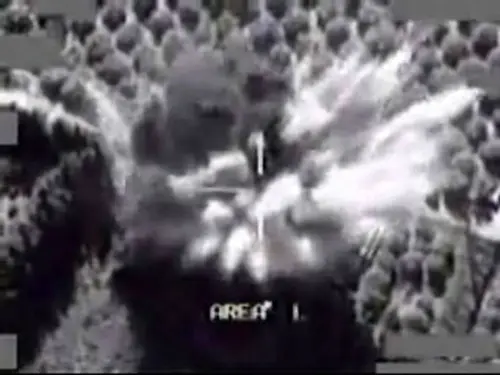 Struck rocket launchers
After a month of fighting, the Israeli security cabinet ordered the military operation to be extended to Lebanon. Hundreds of IDF soldiers stationed in southern Lebanon began to head towards the Litani River. The objective of the operation was twofold: to destroy the maximum number of Hezbollah rocket launchers that could reach the northern region of Israel, where nearly one million people live, and to deeply affect the Hezbollah terrorist organization operating in Lebanese territory.
From the moment the decision to extend the military operation was taken, 80 Hezbollah command posts were attacked, dozens of rocket launchers were destroyed, and 50 terrorists were killed.
End of the War
At 8 a.m. on August 14, 2006, the IDF stopped its operations in Lebanon by order of the Israeli government. This decision followed the UN Security Council's vote on Resolution 1701. IDF troops remained in southern Lebanon until the Lebanese Armed Forces regained control of the area, and UNIFIL and UN forces were deployed.
The Second Lebanon War killed 119 soldiers and 44 Israeli civilians. In addition, 400 soldiers and about 2,000 Israeli civilians were wounded.
The Air Force attacked 7,000 targets in Lebanon, while the Navy carried out 2,500 bombardments from the Lebanese coast.
Exchange of Prisoners
During the war, Hezbollah refused to give information about the two soldiers kidnapped at the beginning of the conflict. Later on, during the prisoner exchange on July 16, 2008, Israel learned that they had succumbed to their wounds. In exchange for the bodies of Eldad Regev and Ehud Goldwasser, Israel handed over the bodies of 200 Lebanese and Palestinian militants, and released four Hezbollah militants, as well as Samir Kuntar, a Lebanese militant from the PLF, who was sentenced in 1980 for murdering Danny Haran, his 4-year-old daughter Einat, and two Israeli policeman. When Samir Kuntar was released, a party was organized by Hezbollah and broadcast by the Arab television channel Al Jazeera.
During the return of the two bodies of the Israeli soldiers, then-Chief Military Rabbi, Brig. Gen. Israel Weiss, commented: "The process of identification was very long because if we thought the enemy was cruel, we were surprised, when we opened the coffins, to discover the extent of his cruelty."
Frequently Asked Questions
Q: What triggered the 2006 Israel-Hezbollah War?
A: The war began on July 12, 2006, when Hezbollah launched a cross-border attack that killed three Israeli soldiers, kidnapped two reservists, and simultaneously fired rockets and mortar shells into northern Israel.
Q: What were Israel's objectives during the war?
A: Israel's objectives were to stop Hezbollah's rocket attacks on northern Israel and secure the release of the two kidnapped soldiers.
Q: How did the 2006 Israel-Hezbollah War end?
A: The war ended on August 14, 2006, after the Israeli government ordered a halt to offensive operations following the adoption of UN Security Council Resolution 1701.
Q: What military operations took place during the conflict?
A: The operations included air strikes, ground operations, naval bombardments, reserve mobilization, and operations targeting Hezbollah rocket launchers and infrastructure in southern Lebanon.
Q: What happened to the two kidnapped Israeli soldiers?
A: Israel learned during the July 2008 prisoner exchange that Eldad Regev and Ehud Goldwasser had died from wounds sustained during their capture. Their bodies were returned as part of the exchange.
