
What Was the 1973 Yom Kippur War?
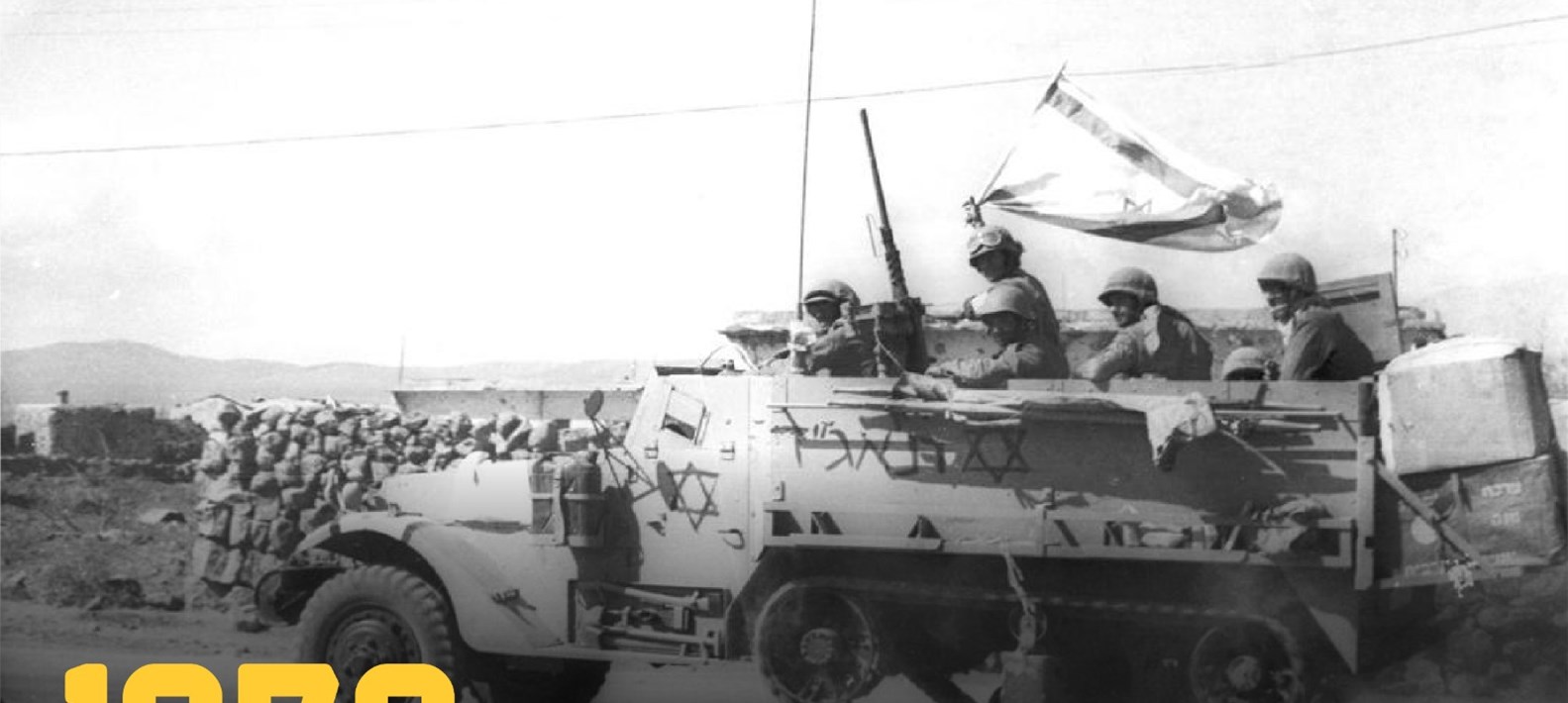
In 1973, a coalition of Arab states, led by Egypt and Syria, attacked Israel, sparking the Yom Kippur War (Hebrew: מלחמת יום כיפור, Milẖemet Yom Kippur). Thinking that the IDF would not be able to defend Israel on the holiest day of the Jewish year, the Arab states coordinated a surprise attack on Saturday, October 6, 1973, Yom Kippur. The war ended 18 days later, on October 24, 1973, when a ceasefire was declared.
 06.10.73
 0
0
The war began with Egyptian troops and armor crossing the Suez Canal in southern Israel, and Syrian forces entering the Golan Heights in northern Israel. After three weeks of heavy fighting, the IDF overcame initial Egyptian and Syrian gains and advanced to the western side of the Suez Canal and approached Damascus. This forced the Egyptians, as well as the Syrians, to accept new ceasefire arrangements.
What led up to the Yom Kippur War?
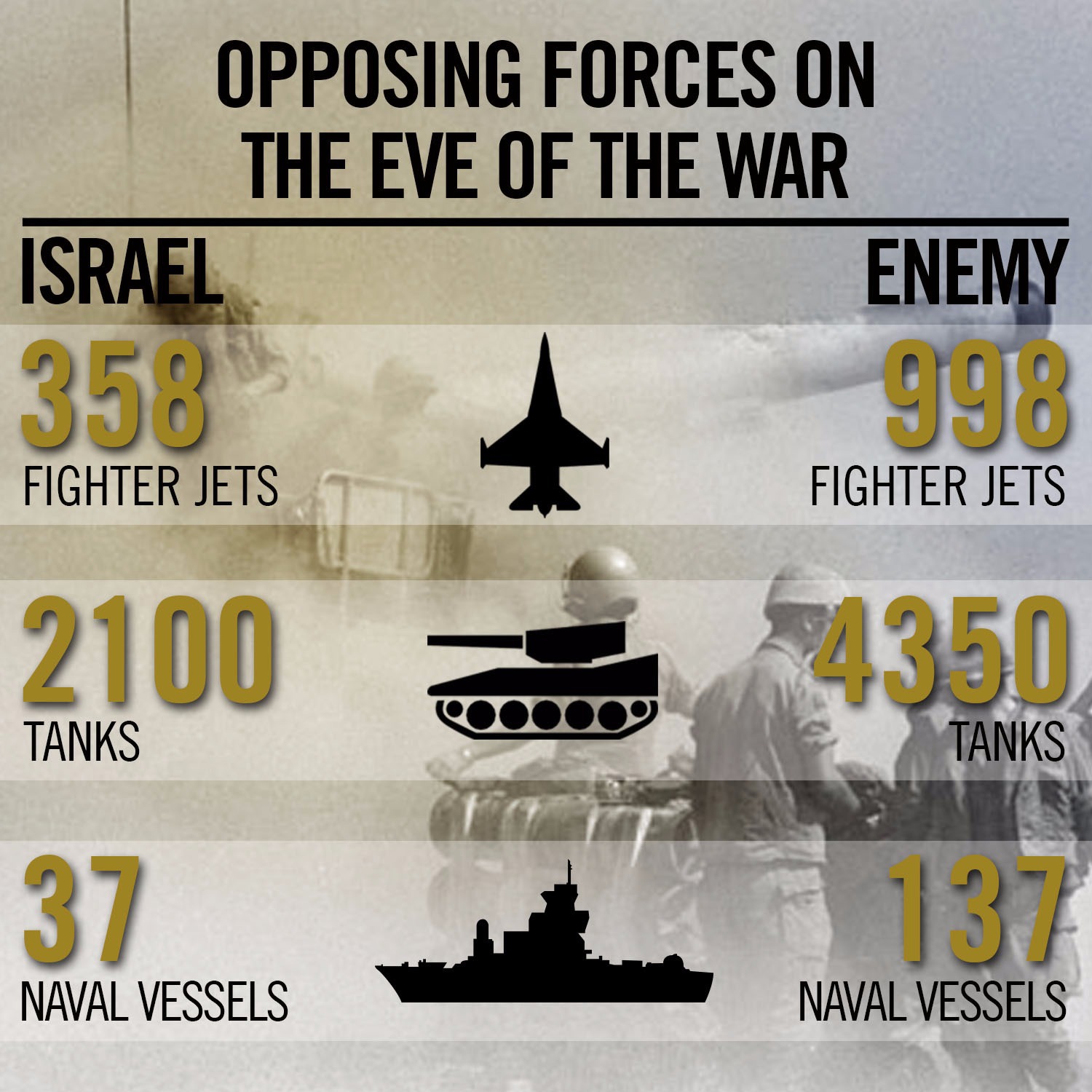
After the Six Day War in 1967, which broke out after a period of escalating regional threats against Israel, the IDF faced new security responsibilities along strategically important front lines. The IDF had to guard the Sinai border along the Suez Canal, where it installed numerous posts on what was called the Bar-Lev line. The Golan Heights was also new territory for the IDF to defend. After their defeat in 1967, Egypt and Syria sought to rebuild their military capabilities and regain the territories they had lost during the war. From 1972, the Egyptian and Syrian militaries rebuilt themselves from the ground up. They acquired up-to-date equipment, mainly through the USSR: MiGs, T-55 and T-62 tanks, anti-aircraft missiles (SA2-3-6-7) and Sagger anti-tank guided missiles. By October 1972, Anwar Sadat, President of Egypt, was already speaking about attacking Israel in private meetings with his army staff.
Aftermath
Despite Israel’s military supremacy, the war took a great toll on all participating countries. During those three weeks of war, 2,691 IDF soldiers lost their lives defending their country.
Negotiations in the following years led to disengagement agreements, under the terms of which Israel withdrew from parts of the territories the IDF gained during the Yom Kippur War.
The Yom Kippur War was the third time in less than three decades since its establishment that Israel was forced to fight a war for its very existence. Once again, Israel’s soldiers proved with their courage, training, and tenacity that nothing would stop them from protecting their homeland.
