
The Six Day War–Alon’s Story
Alon Wald, Head of Operations at Ammunition Hill, has dedicated his life to preserving the legacy of the soldiers who fought for Jerusalem during the Six-Day War. But for Alon, Ammunition Hill is far more than a historic battlefield or national heritage site. It is deeply personal.
 14.05.26
 0
0
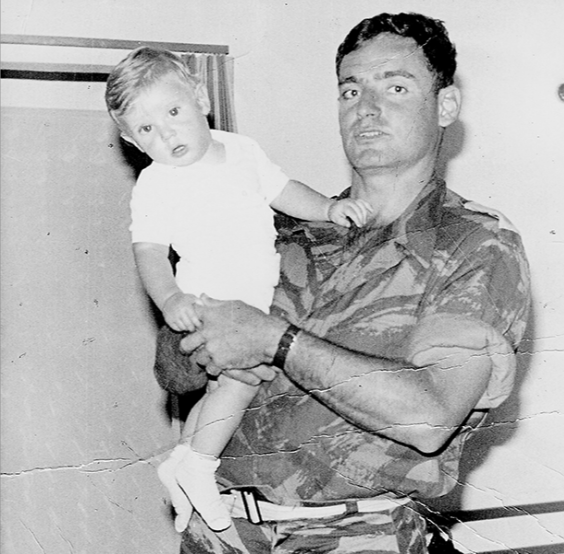
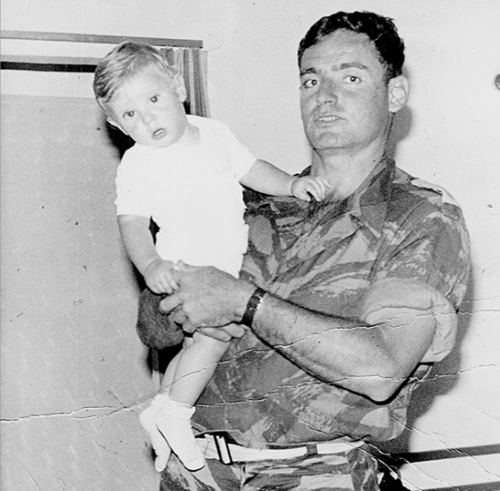
Alon is the son of Captain Rami Wald z”l, a combat engineering officer in the 55th Paratroopers Brigade who was killed in the Battle of Ammunition Hill in June 1967. Today, decades later, Alon works just meters away from the place where his father fell. “I lost my father 56 meters from the office I now work in every day,” he says.
In June 1967, Israel faced an existential threat. Arab armies mobilized on Israel’s borders, while leaders across the region openly threatened the destruction of the Jewish state. For Israelis, only twenty years after the Holocaust, the fear of annihilation felt terrifyingly real.
Israel launched a preemptive strike, beginning what became known as the Six-Day War. In just six days, Israel fought on multiple fronts against neighboring armies and secured a decisive victory. One of the war’s defining moments was the liberation and reunification of Jerusalem, including the return of the Western Wall and the Old City to Israeli control. But the victory came at a devastating cost.
Among the fiercest battles was the Battle of Ammunition Hill, where Israeli paratroopers fought Jordanian forces in brutal close-quarters combat. Thirty-six Israeli soldiers were killed there, including Captain Rami Wald.
Alon was only ten months old when his father went to war. One of his earliest memories was arriving at school and realizing he was the only child in his class without a father. “All the other kids came with a mother and a father,” he recalls. “I came only with my mother. It was the first time I understood that I was different.”
When he was eight years old, after visiting his father’s grave for the first time, he confronted his mother and asked why his father had left. She explained the fear Israelis lived under before the war and described the moment reserve soldiers arrived at their home to call his father into duty. “He picked me up, hugged me, and sniffed my head the way he always loved to do,” Alon says. “Today I understand that it was a father who did not want to leave his wife and newborn son, but believed he had no other choice.”
Days after the war ended, another knock came at the family’s door. This time, it was ten of Rami Wald’s fellow paratroopers. They had just survived the war and could have returned home to celebrate the victory, but instead they traveled across Israel to personally visit the families of their fallen friends.
“They told my mother: ‘Alonchik lost a father, but here are ten alternative uncles, brothers, friends. He will never walk alone.’” That promise shaped Alon’s entire life. The men became permanent figures in his childhood, accompanying him through major milestones and helping him understand who his father was. “They formed what became the core values of the IDF, and not just the IDF, the core values of Israeli people,” he says.
At 17 years old, Alon decided to follow in his father’s footsteps and enlist in a combat unit. “I wanted to understand why my father did what he did,” he explains. “I wanted to continue his legacy.” Despite his mother’s fears, he volunteered for the Paratroopers Brigade and later became an officer in the Paratroopers reconnaissance unit of the 35th Brigade.
He later became one of the founding members of the Maglan Unit before continuing into Israeli security service roles abroad, including assignments in Cairo and Vienna. Throughout his years of service, he says the memory of his father stayed with him constantly. “He became my inner conscience, my source of strength, my compass.”
Years later, Alon found his life’s mission at Ammunition Hill. Today, he educates soldiers, students, diplomats, and visitors from around the world about the battle for Jerusalem and the values he believes emerged from it.
One story he often shares is what happened after the Battle of Ammunition Hill ended. After defeating Jordanian forces, Israeli soldiers found the bodies of Jordanian troops left behind on the battlefield. Without orders or protocol, the paratroopers buried the soldiers themselves.
“They wrote in English: ‘Buried here are 17 brave Jordanian soldiers, Army of Israel, June 1967,’” Alon explains. “I asked them why they wrote it in English, and they told me: ‘It wasn’t for you. It was for the world to understand who we are and what we stand for.’” For Alon, that moment represents the moral code and humanity he believes define the IDF.
“That moment stayed with me forever because it was never only about bravery, leadership, victory, or sacrifice. It was also about humanity. These soldiers had just fought for their lives against those very men, yet they still could not leave them there without dignity. To me, that moment represents the core values we speak about so often.”
Years later, “high-ranking officials came to understand the story for themselves, and many of them admitted how powerful that gesture was”. The burial site itself no longer exists, as the soldiers were later reburied after the war, but the story and the values behind it still remain.
Today, Alon continues sharing the story of Ammunition Hill and the values passed down from his father’s generation. His three daughters now serve in the IDF as well, continuing the family legacy that began nearly sixty years ago in Jerusalem. “They are my greatest achievement,” he says. “The future we are fighting for is their future.”
After years of speaking to audiences around the world, Alon says his message remains simple. “If you truly want to understand Israel, come here. See it with your own eyes. Learn it, experience it, ask questions, challenge us, speak to us directly.”
This Jerusalem Day, we remember not only the battle for the city, but the people behind it, the soldiers who fought for the survival of Israel, the families forever changed by their sacrifice, and the values they carried with them into battle. Through stories like Alon Wald’s, the legacy of the Six-Day War and the liberators of Jerusalem continues to live on, reminding future generations of the courage, humanity, and responsibility that continue to shape the State of Israel today.
