
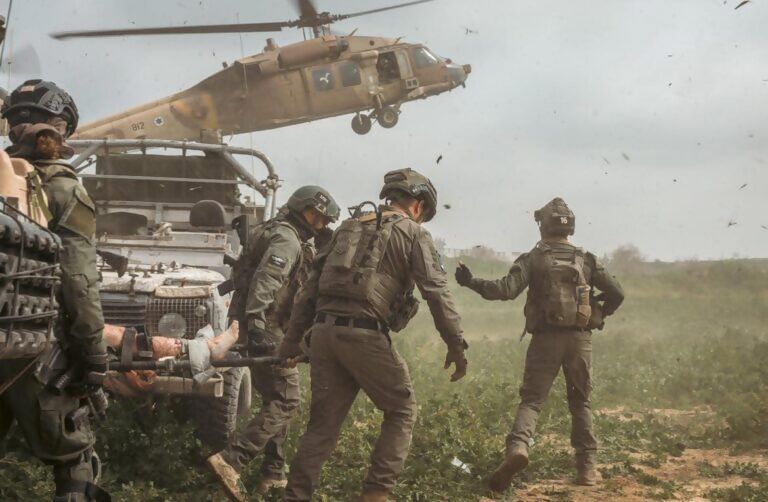
How October 7 Reshaped the IDF
 08.10.26
 0
0
For more info on the war, click here.
Three years of war have led to dramatic operational improvements: from new combat and intelligence tactics, to medical advancements and more. It is fair to say that the IDF has radically changed since October 7.
The IDF has used lessons learned from the battlefield as an opportunity to improve and strengthen its capabilities. The ability to adapt to unforeseen challenges is one of the IDF’s greatest operational strengths, which drives its continued evolution and readiness for the road ahead.
Medical Advancements: Saving Lives on the Battlefield
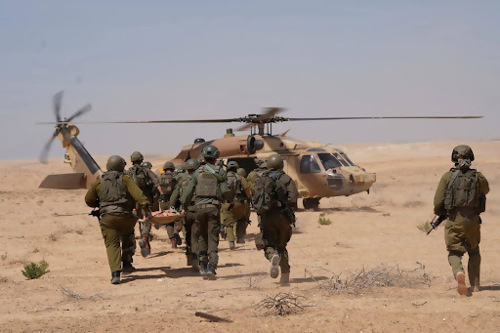
Unit 669 and Medical Corps Teams evacuate wounded soldiers from Gaza
Before the current war, battlefield treatment for soldiers suffering from blood loss relied mainly on plasma powder, an outdated method dating back to World War II, used to preserve and distribute plasma to wounded soldiers.
The Medical Corps also developed a tablet-based command system to replace physical paper forms. Using NFC (near-field communication) technology, the system gathers real-time information about a wounded soldier throughout the treatment and evacuation process.
Previously, this information did not always reach every level of the chain of command quickly enough. Now, commanders and medical teams can see an updated picture of wounded soldiers’ conditions at every stage, understand the severity of their injuries and, as a result, make faster and more accurate decisions.
Unit 669 (an elite IAF rescue unit) can also view the condition of wounded soldiers in real time and prepare things such as blood units before arriving at the field. Every second and every piece of information can be critical to saving lives.
These developments have made battlefield medical care more efficient and effective, giving medical teams better tools and information to treat the wounded and save lives.
Strengthening Technological Defenses Against Enemy Drones
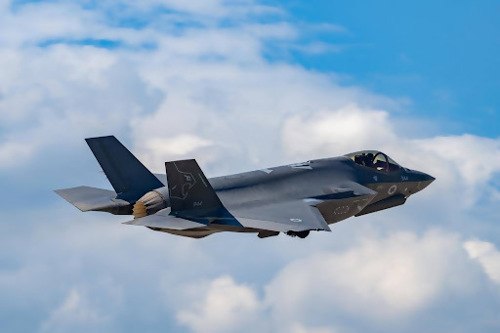
An IAF airplane
During the war, the IDF developed advanced digital systems to strengthen its operational response to enemy drones and UAVs operating at low altitudes. They provide early warnings to IDF troops in the field and civilians at home, giving them more time to take cover.
Using advanced algorithms and AI, they analyze information from multiple sources in real time. This helps troops identify threats earlier and respond faster.
Strengthening Israel’s Eastern Border: The 96th Division
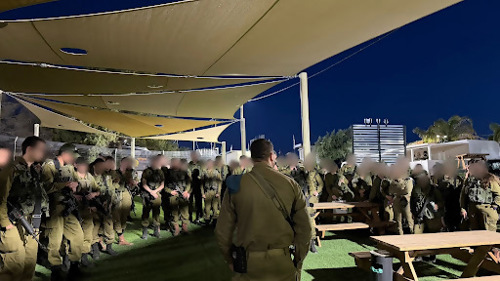
Division 96 soldiers during the establishment of the new “Nevo” communications battalion
Beyond technological advancements, the IDF has also strengthened its combat capabilities by applying lessons learned from October 7 to develop more prepared, responsive and resilient personnel.
As part of this effort, the 96th Division was established to reinforce Israel’s eastern border. The division's purpose is to strengthen the area through several measures. For example, it renewed the ‘Water Line’ outposts, which are military positions located directly along the border, ahead of nearby civilian communities, and are designed to create an additional defensive layer to thwart threats.
The division has begun training mobile combat forces and developing the ‘Jaguar’, an armored vehicle designed to serve as a rapid-response tool during emerging incidents along the border.
It was also responsible for establishing and training five territorial ‘David’ brigades, created to generate a large reservist force rapidly during emergencies.
Together, these efforts are strengthening Israel’s eastern defenses and improving the IDF’s ability to respond quickly and effectively to developing threats.
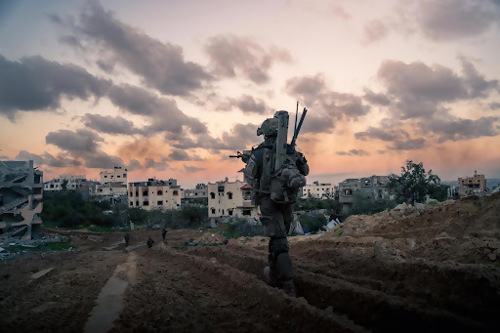
From technological innovations to new combat units, the lessons learned since October 7 are constantly being translated into action, strengthening the IDF’s readiness for the challenges of today and the threats of tomorrow.
