
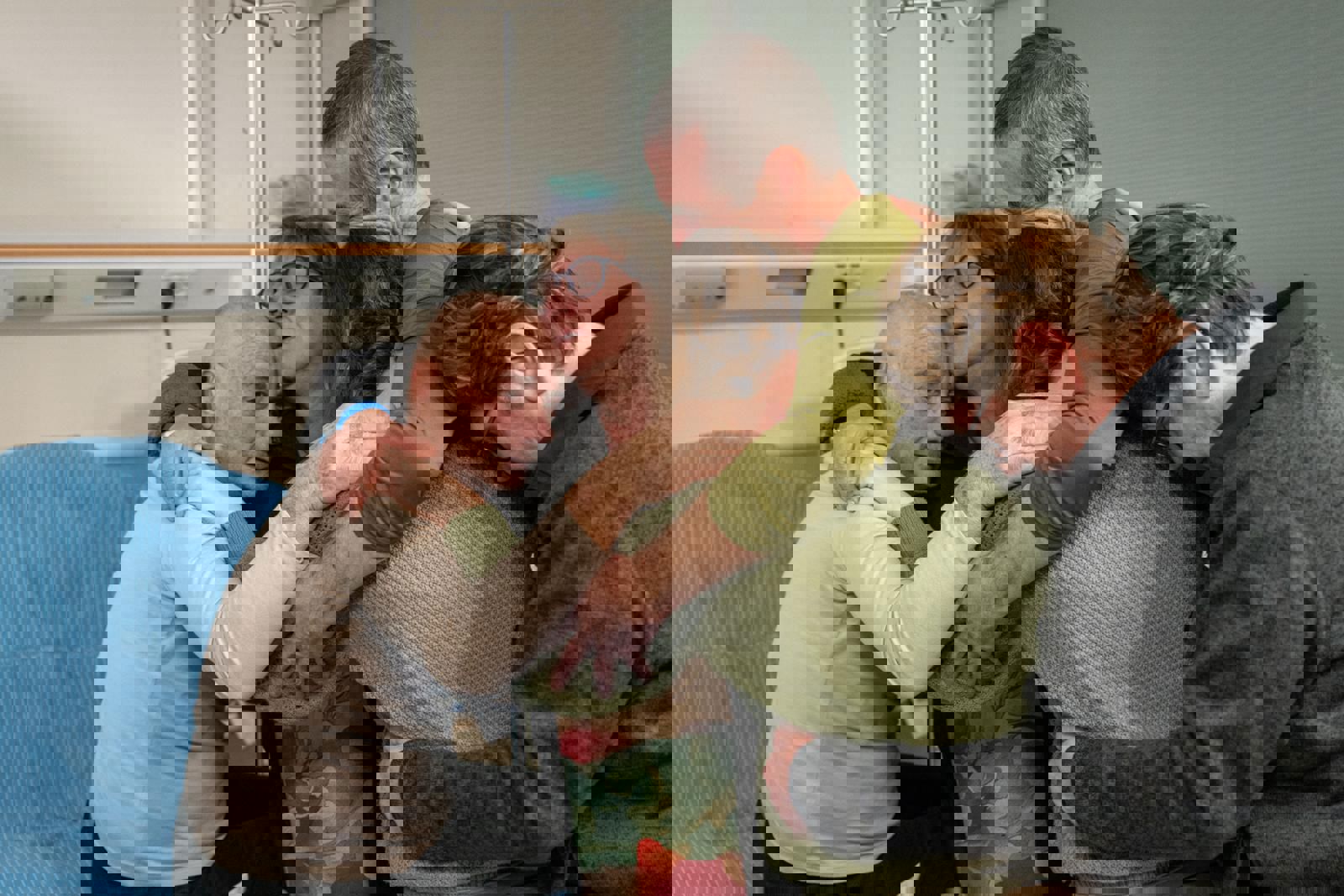
129 Days in Hamas Captivity: Luis Har’s Testimony
“We started hearing windows breaking, and suddenly we heard them inside the house, running and shouting in Arabic.” Luis Har recalls the minutes before he was kidnapped on October 7, when terrorists broke into his kibbutz and dragged him into Gaza.
 12.02.26
 0
0
On October 6, 2023, Luis Har went to sleep at the home of his partner, Clara Marman, in Kibbutz Nir Yitzhak. At 6:29 a.m. the next morning, October 7, the first sirens sounded. “That means you go to the safe room, wait 10 minutes, and then go back out. October 7 wasn’t like that,” Luis recounts. The sirens didn’t stop, and when they turned on the TV, they saw what looked like a massacre across the country.
Shortly after, they saw smoke through the window and called the kibbutz security team to check whether a missile had fallen. When they arrived, the terrorists ambushed and murdered them. From that moment, there was no internal security left. “We started receiving messages from neighbors asking for help because there were terrorists inside their homes,” Luis remembers.
Soon after, Luis, Clara, and their family heard the terrorists inside the house. They entered shooting, breaking furniture, and destroying everything in their path. “They started pulling us out very brutally, yanking us by our clothes and our hair.”
When the terrorists dragged them out of the house, they began to see people on bicycles all over the kibbutz, which seemed strange since the kibbutz was full of terrorists. “When I looked again, I realized they weren’t kibbutz residents, but civilians from Gaza.” Shortly after, a truck arrived and they were all loaded together: Luis Har, Clara and Fernando Marman, Gabriela Leimberg, and her daughter Mia. They were taken toward the border and arrived in Khan Yunis, where a group of young people threatened them with pruning shears in an attempted lynching.
At one point they were taken out of the truck and pushed into a tunnel 40 meters underground; the terrorists shoved them with their weapons. They stayed in that tunnel for more than four hours, running until they were forced to exit, and when they came out, they realized they were in a chicken coop. “They make chicken coops under houses, which are also tunnel entrances; they cover them with dirt—it’s like a carpet with soil that goes unnoticed as an entrance to the tunnels,” he explained.
After leaving the tunnel, they were taken to Rafah and put in a building where five other terrorists were waiting. Luis describes them as beasts: one of them constantly walked around with a weapon, laughing and celebrating what Hamas had done on October 7 in Israel. At one point, the terrorist took out a knife and walked among them, brushing their faces with the blade as he passed. “That created a lot of tension and fear; we were in a very difficult situation because we couldn’t do anything,” Luis recalled.
Whenever they wanted to do anything—even go to the bathroom or move inside the place—they had to ask the terrorists for permission.
Eventually, they were moved to another building, a room with several couches around, a small table, and mattresses laid out to separate the men from the women. During captivity, Luis cooked for everyone several times, but the food became increasingly scarce. Sometimes they were given a bit of water and, occasionally, a pita bread, which Luis had to share with Fernando. During that period, Luis lost about 16 kilos.
Hygienic conditions were also scarce; they bathed every few days, sometimes weeks, and bath time was uncomfortable because they were given a bucket of water to share among everyone.
All the information they received came solely from the terrorists. They told them that all of Israel was on fire and even that Iran was destroying Israel. Every time Israel and Hamas met to negotiate and did not sign an agreement, the terrorists would arrive very angry, shouting at them.
After 53 days of captivity, the terrorists informed them there would be a ceasefire and some hostages would be exchanged for prisoners, but this time only the women would be released. On the day the women were freed, a terrorist started recording them: “We had to say ‘they treated us very well, they behave very well with us and we are friends.’ They hugged me,” Luis recalls.
After the women were released, captivity went on. The ceasefire was only temporary, and uncertainty returned to their daily lives. They didn’t know if they would be next to be freed or how long they would remain held. Cut off from the outside world and with no information about what awaited them, time turned into a long, anxious wait.
One dawn, an explosion woke them up. “It felt like a war inside the room.” Disoriented, he ran to take cover near the stairs, looking for a safer place while bullets pierced the room.
In the middle of the chaos, Luis began crawling toward the stairs for safety. Suddenly, he heard Fernando’s voice calling him: “Luis, go back, come back again.” When he turned back, he felt a hand pushing his head down and a voice saying, “IDF, IDF. We’ve come to take you home.” It was a joint operation by the Israel Defense Forces, the ISA, and the Israel Police.
At that moment, Luis heard the phrase “the diamonds are with us,” and that was the signal that they were finally safe.
Moments later, they were transferred by helicopter to Tel HaShomer Hospital, where they reunited with their family after being held captive for 129 days.
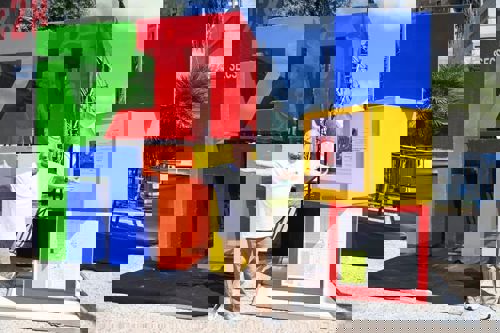
His story is a testimony to Hamas’ terrorism, but also to survival. After his release, he decided to turn that experience into a message: “Tikva,” hope in Hebrew, a word he later embodied in a sculpture as a symbol of strength in Hostage Square.
Luis Har’s testimony reflects not only the violence they were subjected to, but also the resilience and hope that survived 129 days of captivity. The IDF welcomes his return and the return of all the hostages, and recognizes the strength and courage they showed during their captivity.
