
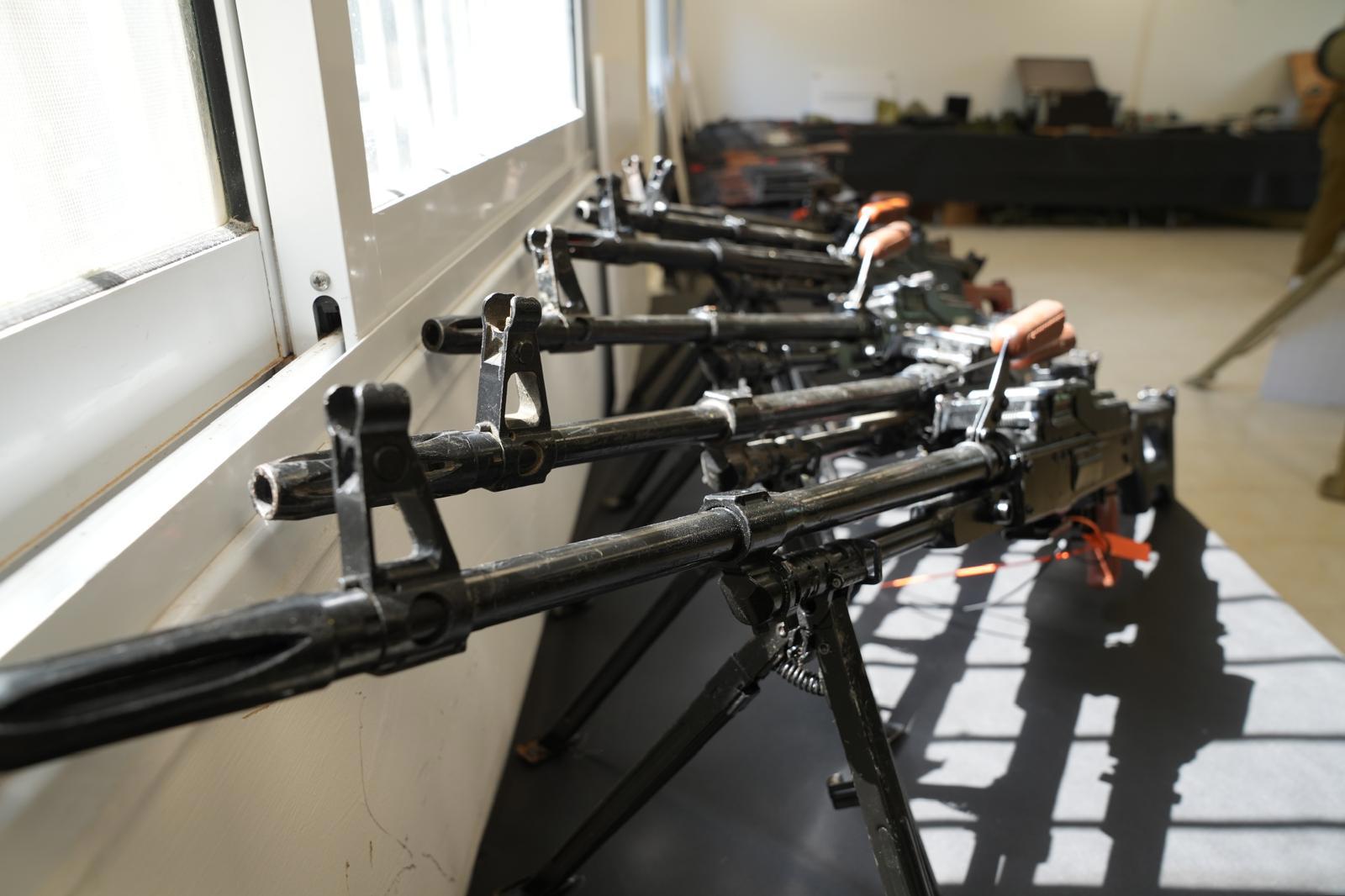
How Does the IDF Handle Seized Enemy Weapons?
How does the IDF improve its ammunition to strike terrorists and adapt protective gear to enemy militants' weapons? A new exhibition by the Seized Equipment Evacuation Unit unveils the process of seized equipment collection and Hezbollah weapon analysis, from the soldier gathering items in the field to the experts who study them.
 18.05.26
 0
0
The forward defense effort in Lebanon includes a wide range of missions and objectives: clearing villages of Hezbollah militants, neutralizing launch systems, and gathering intelligence about Hezbollah and its capabilities. This is how warfare doctrine and the IDF’s weaponry evolve, alongside the protection of troops.
“This process starts in the field,” explained Chief Warrant Officer Z., an explosives and ordnance expert in the Special Engineering Missions Unit. “For years, the IDF has been collecting weapons belonging to terrorist organizations for research. These findings have ultimately reached brigade commanders and frontline soldiers.”
The unit collects rifles, launchers, protective gear, surveillance equipment, and even terror funds, which are then sent to the Special Engineering Missions Unit for processing. From there, the items are distributed between the SEEU and the Intelligence and Technical Seized Equipment Collection Unit.
The SEEU gathers all weapons and protective equipment and draws conclusions about the enemy’s capabilities, as well as the methods the IDF should adopt to counter them. The Intelligence and Technical Seized Equipment Collection Unit’s role is to extract intelligence from items with informational value and use it to improve operational strategy in the field.
Lieutenant Colonel I., deputy commander of the unit, explained what they instruct forces in the field to look for. “In general, any item that can be identified as a weapon or as combat support. Some are easy to identify, like rifles and grenade launchers, and others less so. The intelligence officers in the field are the ones who provide the answers.”
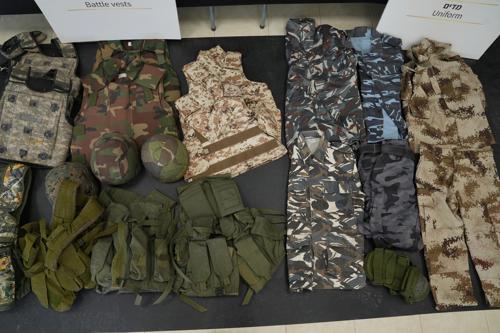
Through the seized weapons, the defense industries and the IDF learn whether Israeli protective equipment is effective against hostile fire. “Through the protective gear we collect, we understand how it limits the enemy’s movement, and whether it withstands our ammunition,” explained LTC I. “This allows us to improve and refine the equipment we use.”
And what about combat doctrine, which evolves with every new conclusion about enemy capabilities? LTC. I. gave an example: “We recently found Kornet missiles in Lebanon, which are Russian-made anti-tank missiles guided by a laser beam. We passed our findings on to the Armored Corps, which adjusted its approach according to the missiles’ operational range and other metrics.”
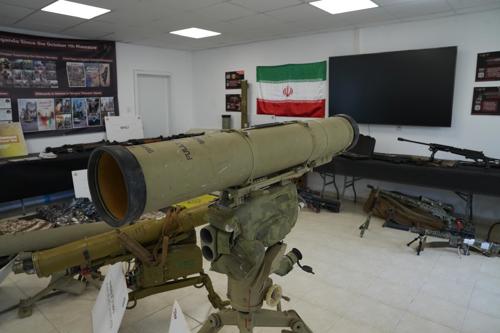
Kornet
Similarly, the protective gear of IDF troops is adapted to the weapons used by their enemies. “Every bullet captured is tested on our vests and helmets to determine whether the equipment withstands the ammunition,” said Major O., deputy commander of the spoils evacuation complex.
“The ultimate goal of this entire process,” concluded Chief Warrant Officer Z., “is to make the IDF as aware as possible of what it may encounter in the field. With our technology and awareness of enemy capabilities, we can better execute our main goal and ensure the safety of our civilians and soldiers.”
Frequently Asked Questions
Q: What is the Seized Equipment Evacuation Unit?
A: It is an IDF unit responsible for collecting and processing equipment captured from terrorist organizations for analysis and operational use.
Q: What types of equipment are collected?
A: The unit collects weapons, protective gear, surveillance equipment, and other items such as terror funds.
Q: How does seized equipment help the IDF?
A: It allows the IDF to study enemy capabilities and improve its own weapons, protective gear, and operational strategies.
Q: What happens after equipment is collected?
A: Items are processed and distributed to specialized units for intelligence extraction and technical analysis.
Q: How do findings impact battlefield operations?
A: Insights are passed to commanders and units, allowing them to adapt tactics and improve effectiveness in real time.
