
“Even in our darkest times, we have hope.”
A songbook. A photograph. A notebook. These are the stories of the fallen soldiers who left behind a piece of their soul and memory in one treasured object.
 21.04.26
 0
0
It is said that a person never truly leaves this world as long as their loved ones carry their memory on. The memory of their laugh, their sharp edges and their creations.
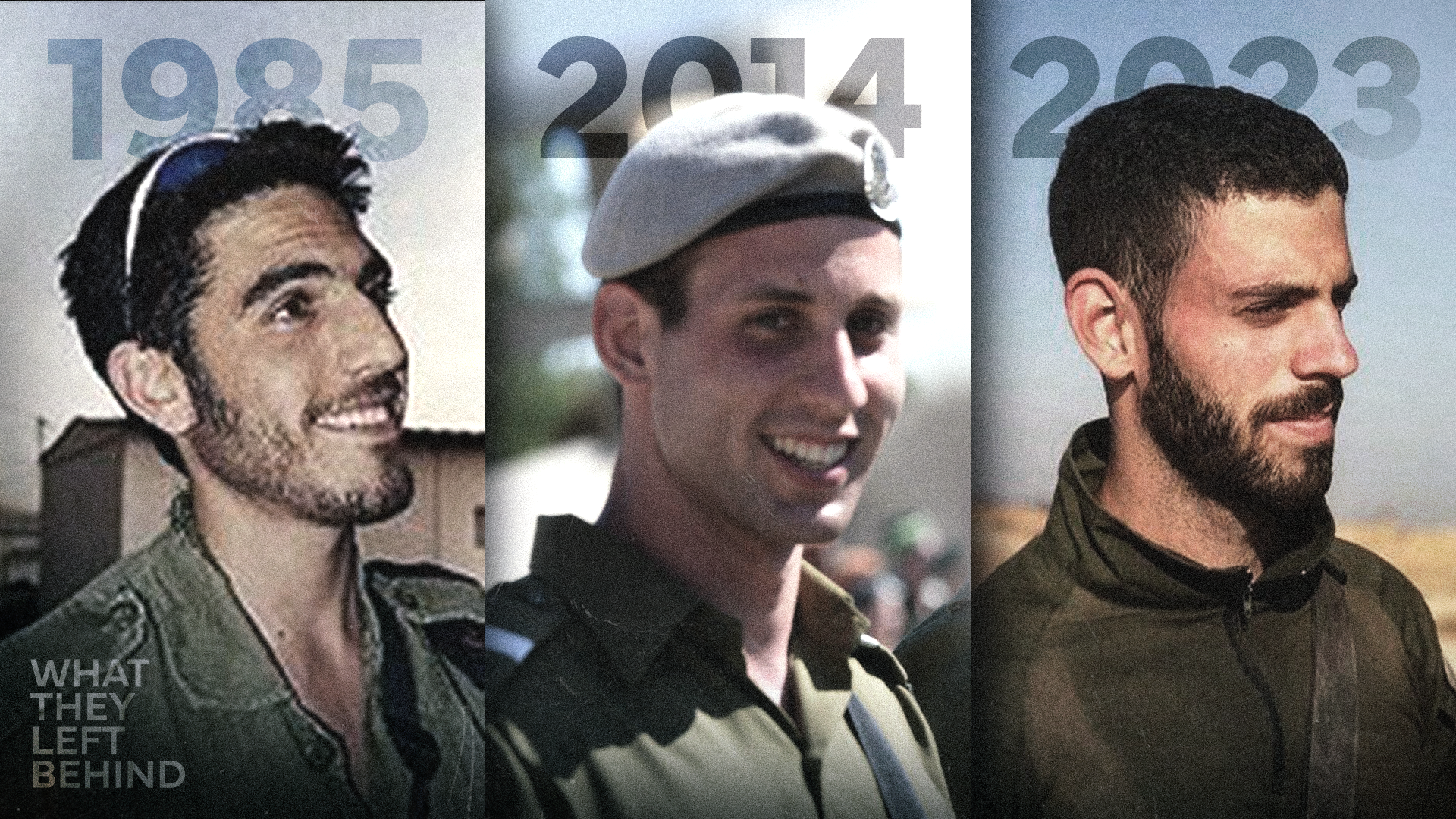
In this special project, three loved ones of fallen soldiers from three different wars shared what the fallen left behind.
Tal’s Songbook - October 7
Major Tal Grushka had always shown great promise. His childhood in Kfar Sava was full of artistry, creativity and energy. Piano, guitar, and football took up his time and defined his future passions.
“Music was all around him. He was like the star of the party. He was a special boy who turned into a special man.” Recalled Itai Bichler, MAJ Tal’s half-brother.
From a squad commander to an officer, MAJ Tal served for over 7 years. “He was drafted into the Nahal Brigade, and from a regular soldier, he went all the way to becoming Captain,” said Itai in pride.
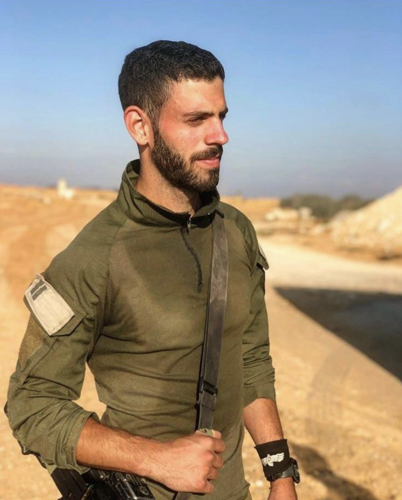
“On the morning of October 7, his commander called him and told him to head down to the south. In Sderot, he teamed up with the Maglan Unit where they were ambushed by Hamas. He shielded the Maglan jeep in front of him because they weren’t in a protected vehicle, and that essentially saved the unit’s life,” he noted.
“He was able to open the door once he understood that he was getting fired at, and then a single bullet hit him under his armpit. He passed away and in that minute, our life changed.”
Itai sat in the family’s living room, the piano decorated with pictures of his late brother. "Being a bereaved family is something you can never prepare yourself for. Talking about him became our life project. We are taking every opportunity to talk about him because we feel that if more people knew of him, the world would be a better place.”
He pulled out a black notebook with MAJ Tal’s battalion symbol. “I have here one of his notebooks. We had a very clear idea of what we wanted to do with it. We took many of his thoughtful songs and words, and created this,” a poetry book titled ‘The Secret of The Spirit.’
The book details MAJ Tal’s motivations, zionist ideology, and why he chose to become a soldier.
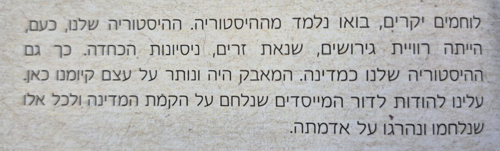
This is an excerpt from one of his writing: ‘Dear fighters, let us learn from history. Our history, as a people, is full of banishments, foreigner hatred, extinction attempts. So is our history as a country too. Our fight was and remains for our very existence here. We must thank the founder generation which fought for the establishment of our country and for those who fought and died on it’s land.’
Some of the songs discuss the unknown future which, almost prophetically, became true: “He expressed in his own words that if he will need to go to Gaza, he is okay with that. If he has to give his life, he is okay with that. Every day, when I read more of his words, I find it amazing how he knew his place in the world. And he was only 26 years old.”
“He was an inspiring individual. He’s gone and will never be back. But he keeps growing with us and guiding us. Hopefully, people will continue to learn from him and improve, as human beings.”
Itay’s Photograph - Second Lebanon War
A lover of nature, basketball, and photography, Staff Sergeant Itay Steinberger left a mark wherever he went. “He was an artistic and adventurous soul. Itay liked expressing himself through different forms of artwork. Photography was his main vessel of choice. He was in charge of camouflage in the Tank Corps’ Reconnaissance Unit, and that melded his love of art into the army,” smiled Steve Wailand, a rescue team member and friend of SSGT Itay.
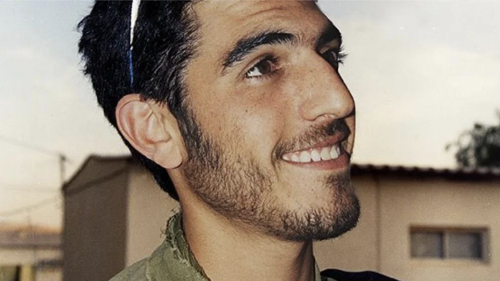
“Summer of 2006. Southern Lebanon. We were trying to help tanks cross through. One of our teams was ambushed and Itay woke me up,” Steve reminisced. “He said there are people on top of the mountain that need our help, so I put on my bag and ran.”
“It was very hard for me to run while carrying all my medical equipment, so he grabbed me and my bag, and essentially pushed me up the mountain. He continued to encourage me till we reached the top.”
SSGT Itay, Steve and others helped to evacuate the wounded while under fire. “All of a sudden, I heard a whistle, and I saw him get hit by a missile and fall to the ground. I treated him until I saw that there wasn’t anything left to treat. He physically protected me–if he wasn’t where he was, that missile would’ve hit me. He saved my life, and I thank him for it everyday.”
“I remember going to his family, meeting his siblings, and seeing his room for the first time. I told them this very story about Itay and his last moments. They were more comforting for me than I was for them,” he revealed with a half chuckle.
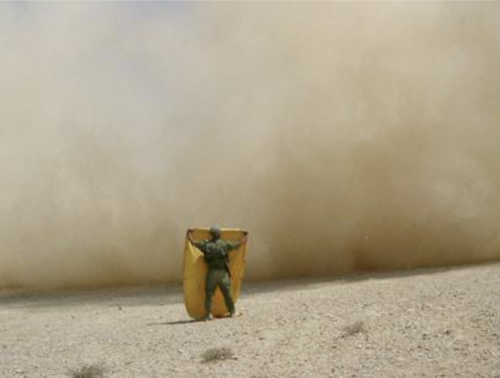
Steve’s object of choice is one of SSGT Itay’s photographs, taken at an exercise in Tze'elim base. It depicts a soldier standing in front of an almost overbearing cloud of sand, holding up a large piece of fabric. “This piece was in a competition in 2006, and it won first prize. I’m very proud of it. It was taken before he was killed, but the competition itself happened after, so he was recognized posthumously for his work.”
“I’m a musician, and I use my music as a tool, as my own therapy,” Steve added, ”I wrote about never giving up and never surrendering. It’s important to remember that even in our darkest times we have hope. We are here, and we’ll keep fighting for what’s ours.”
Bar’s Notebook - Operation Protective Edge
“When I was younger, I didn’t know Bar, because I’m the youngest and he was the oldest. But I did know him as a teenager. He always helped us siblings, and was there for us,” shared Rotem, Lieutenant Bar Rahav’s brother.
Known for his mischievous nature and party-throwing skills, 1LT Bar was always surrounded by friends. As a professional athlete for Israel’s national water polo team, he didn’t have to go into combat. He was offered a flexible service in which he could practice his sport alongside his role in the army. After some deliberation, he set his mind on an impactful combat service.
After he finished basic training and the course, 1LT Bar served in the Reconnaissance Company of the 605 Combat Engineering Battalion.
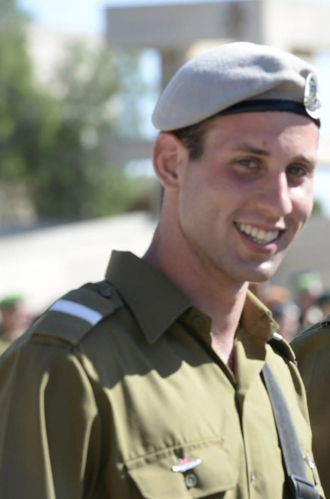
“During Operation Protective Edge, he was in the officer’s course and his brigade entered Gaza with the Paratroopers Brigade. During a patrol, an anti-tank missile hit his vehicle. He was hit by the blast wave of the missile and died,” detailed Rotem.
Slowly, he recalled what came after. “My father was crying, and I had never heard him crying before. The officers told my sister and I that we need to be strong for the family.”
“This is his notebook from the commanders’ course,” Rotem said while holding up a beat-up white notebook full of colorful tabs. “The words he wrote here truly reflect his personality. They show the values that he grew up on, and also us as a family.”
“There is a sentence that I really like from the notebook. In English, it translates to: ‘Life is like a game, nothing more. The question is how to play it.’ This sentence shows his attitude in life, and the optimism he chose to live with.”
When 1LT Bar fell, Rotem was still a child. “I remember this war being the war of my older brother, the war that the bigger kids used to fight in. In this current operation, my friends and I served in the army. A few of them died as well.”
“This Memorial Day, we need to remember everyone. It is important to accompany the new families, and I think all of the fallen soldiers should be commemorated in our memories as a community,” concluded Rotem. “I know for me, as a child, it really helped when people thought of my brother, especially on this day. That’s the main thing we can do to help the families deal with the pain and with the death of their loved ones.”
