
Finding MIA Soldiers
The EITAN Unit is a crucial unit within the Manpower Directorate, responsible for searching and locating missing soldiers. It’s divided into several departments which act on an everyday basis, as well as during emergencies, to try find missing soldiers and bring closure to their families.
 29.03.18
 0
0
The unit is in charge of all missing soldier cases, since the IDF’s establishment in 1948. There are 179 missing soldiers, the majority from the War of Independence. The investigators of the unit visit IDF archives, State archives, and additional archives, where they talk to people and try to understand what happened. They spend hours in the archives trying to piece the stories together and solve the cases.
The commander of the unit, Lieutenant Colonel Nir, began as head of the EITAN Unit 6 months ago. “There are faces behind every case,” he explains. “Behind every case there’s a story. In recent years we’ve had a fair share of success cases and we've managed to find missing soldiers. Everytime we receive a new case I’m a part of the investigation and am amazed by the team’s dedication.”
There are some cases that are close to being solved and others that are further away, but the unit continues searching for clues and evidence. “For example,” says Lt. Col. Nir, “there are cases where the fallen soldier died at sea and the chances of finding them are close to none.”
Within the unit is a department that deals with technology. It’s in charge of mapping and analyzing the ground in order to know where to look for missing soldiers. “I can take a map from 1948, compare it to a current map, and then direct the investigators in that geographical area,” explains Lt. Col. Nir.

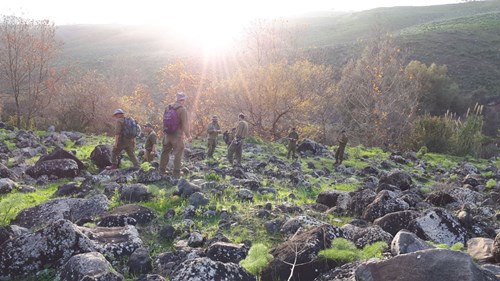
The unit has another department that has combat soldiers who are physically searching for missing soldiers. They have regular drills and exercises, acting as the center for missing soldiers.
During emergencies, the teams take notes on the missing soldier cases, keeping the information up to date, and then present the information to the Military Rabbinate and the Head of the Manpower Directorate. “We then decide whether the soldier is missing or a fallen soldier whose burial place is unknown,” says Lt. Col. Nir.
He adds, “For them to decide such a thing, our job is to provide them with as much information as possible.” Once the family is notified, the unit accompanies them to activities and meetings, providing them with any additional support they need.

Lt. Col. Nir says it’s sometimes challenging to push forward and not get discouraged. He says, “After 70 years, the window of opportunities is closing and if we don’t act fast we won’t have the testimonies because they’re a dying generation.” However, the unit continues to discover more information about missing soldiers, even from 70 years ago.
Lt. Col. Nir concludes, “It’s important for soldiers to know that the IDF and Israel do everything in their power to bring back missing soldiers. A strong saying I heard while investigating a case of a missing Givati Brigade soldier from 1948 was, ‘After what I witnessed today, I hope and pray that if I ever am taken hostage or am missing, people will look for me the same way we look for missing soldiers from 1948.’ We will do everything to bring a hostage or missing soldier back to his home and family in Israel.”
