
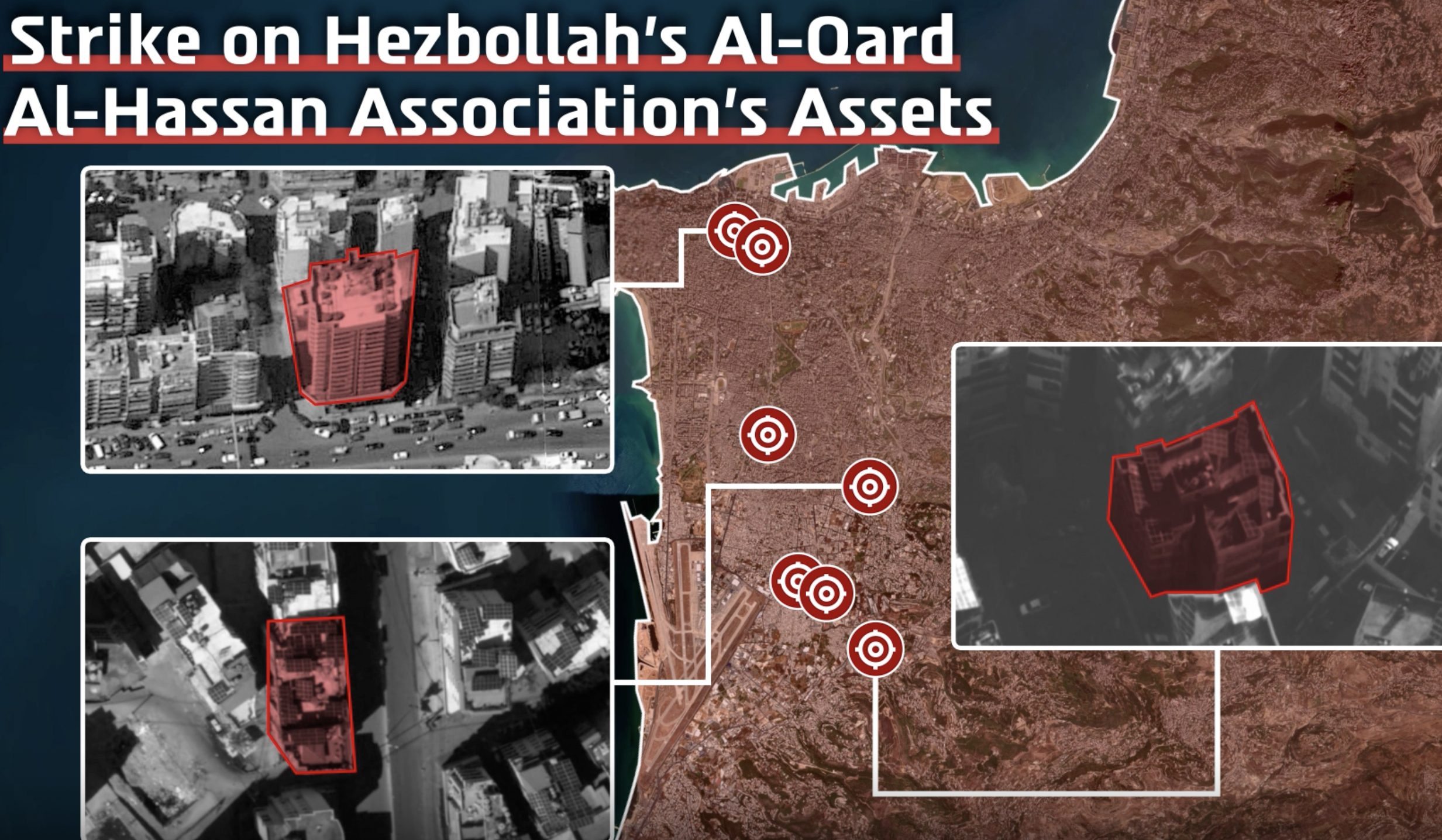
How Alkarz Al-Hassan became a pipeline channeling millions to terror–and a target for IDF strikes.
It’s not just about bank branches or accounts. This is a system that pays salaries, funds reconstruction, and cements Hezbollah’s control over the Lebanese population. Behind the recent IDF operations lies a broader strategy: dismantling the parallel financial network that sustains Hezbollah’s operations.
 10.03.26
 0
0
The intensified strikes on Alkarz Al-Hassan, which finances Hezbollah throughout Lebanon, reveal a much larger story: a financial mechanism that allows the terror group to survive, rebuild, and strengthen its grip on society.
Founded in 1981, Alkarz Al-Hassan presents itself publicly as a community organization providing loans and deposit services. In reality, over the years it has acted as Hezbollah’s financial backbone – a parallel banking system outside the official Lebanese economy.
Unlike regular banks, which are regulated and rely on digital transfer systems like SWIFT, the group operates on a cash-based system. Citizens deposit dollars or gold, and loans are paid out in cash. No official transfers leave a trace, and the lack of oversight means every deposit becomes part of a “black cash” pool.
Alkarz Al-Hassan manages over $3 billion and serves roughly 300,000 Lebanese citizens. Hezbollah uses it to launder Iranian funds and channel money back to its main financier, Iran.
This network also enables a separate economy, sometimes referred to as the “State of Hezbollah”, a parallel system providing healthcare, education, and civilian aid.
Members of Hezbollah hold accounts through which they receive regular payments. Alkarz Al-Hassan holds most of Hezbollah’s funds, including civilian deposits that the organization relies on during conflict. These funds are used to buy, fund, and produce weapons, sustaining its military operations.
Housing and reconstruction – Creating Economic Dependence:
Hezbollah’s post-conflict recovery depends not just on military rebuilding but also on its financial network. Alkarz Al-Hassan plays a central role, financing the reconstruction of homes destroyed in fighting, even homes where civilians had stored weapons. This dual approach allows outward civilian rebuilding while preserving hidden military infrastructure.
In October 2024, the Israeli Air Force targeted branches of Alkarz Al-Hassan, marking them as military targets. Since then, Hezbollah has worked to rebuild its facilities while continuing temporary housing payments to families, reinforcing its economic ties with civilians.
By December 2025, despite international pressure to shut it down, the bank announced it would continue operations across Lebanon, presenting itself publicly as a community loan system. Behind this image, however, it remains one of the key mechanisms allowing Hezbollah to survive and rebuild its strength.
The recent strikes on 30 branches left them in ruins. According to IDF intelligence, Hezbollah prioritized distributing remaining cash to its members – leaving hundreds of thousands of civilian deposits at risk.
The IDF even called on Lebanese citizens to claim their money directly from branch managers, who abandoned the public to protect foreign interests as the surrounding financial infrastructure collapsed.
These broad strikes are part of a larger operational strategy: to seize Hezbollah’s financial network and isolate it completely from the global economy. The message to Beirut is clear: as long as an unregulated, parallel financial system operates in Lebanon, the state will bear the consequences. Reconstruction cannot flow through terror channels; it can only occur after dismantling the infrastructure that allows Hezbollah to grow.
