
The IRGC's Use of Cluster Missiles Against Israeli Civilians
Since the start of Operation Roaring Lion, Iran has deliberately targeted Israeli civilians using cluster missiles, causing deaths, injuries, and widespread damage. These attacks show how the weapons work, the risks they create, and the stark contrast with Israel’s precise targeting of military objectives.
 18.03.26
 0
0
Since the beginning of Operation Roaring Lion, the Iranian regime has launched repeated missile attacks toward Israel. The regime has deliberately targeted civilian population centers, putting millions of Israeli civilians at risk.
While Israel directs its strikes at Iran’s armed forces, the Iranian regime has continued to pursue a strategy that intentionally places civilians in harm’s way. One of the most concerning developments in these attacks has been the Iranian use of cluster missiles against densely populated areas in Israel.
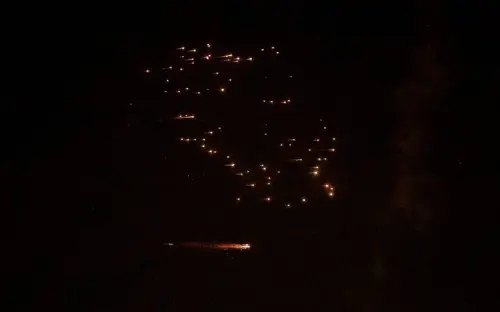
Cluster missiles carry multiple smaller explosives. Instead of detonating as one large explosion, the weapon opens while still in the air and releases many smaller bombs, known as submunitions, that disperse over a wide area. When such weapons are used in urban environments, they significantly increase the likelihood of civilian casualties and widespread destruction - which is the reason why the Iranian regime has been using them against Israeli population centers.
The regime’s intentional use of these weapons against civilians represents a dangerous escalation and a clear violation of the fundamental rules of international law.
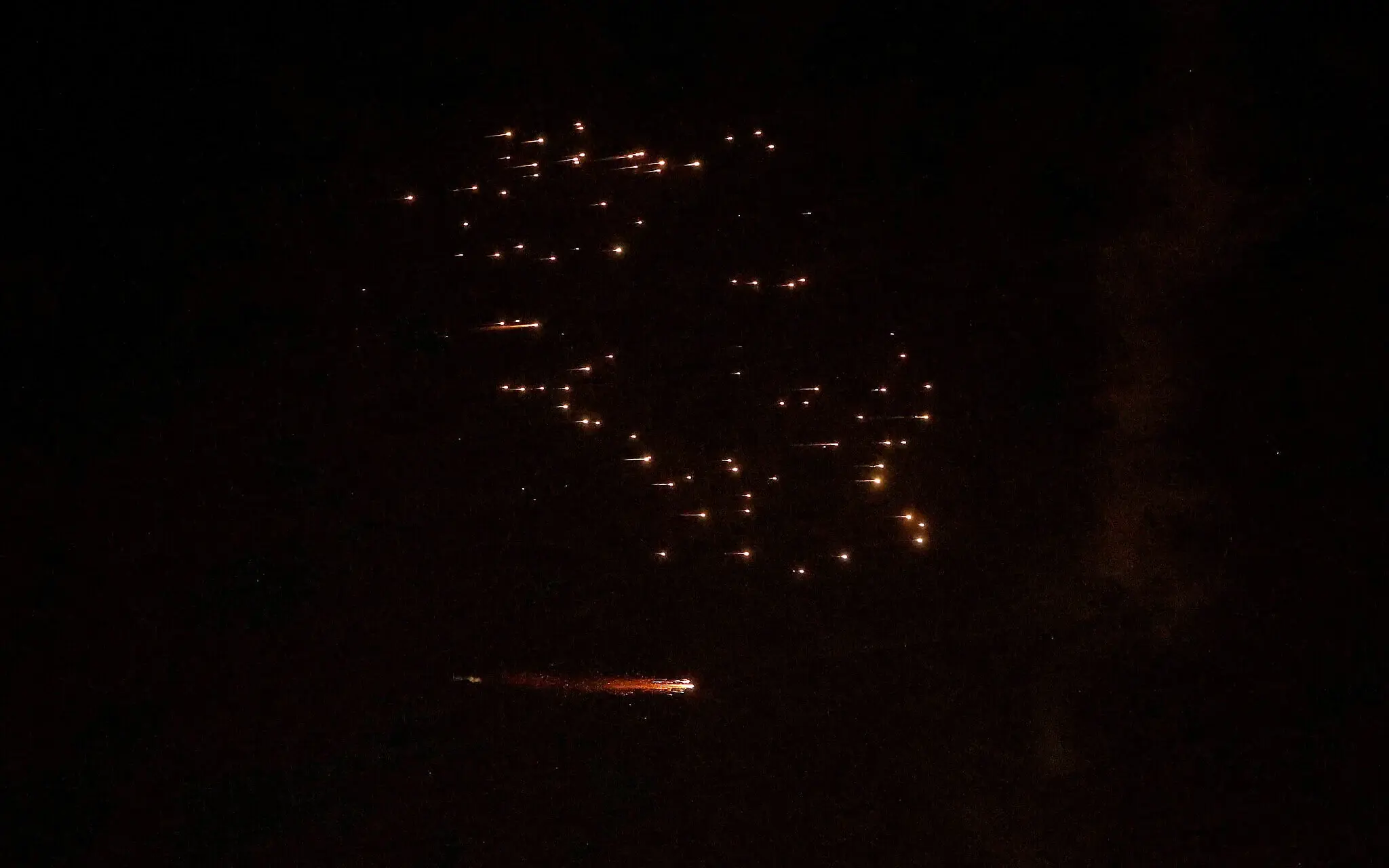
The cluster missiles launched by the Iranian regime can open at an altitude of approximately 7 to 10 kilometers above the ground. Once it opens, dozens of smaller explosives are scattered across the sky before falling toward the ground, in a range that regularly reaches several kilometers. Each missile equipped with such a warhead can carry roughly 20 to 24 submunitions, and in some types of Iran’s missiles several dozens of submunitions, each weighing several kilograms.
During one of the attacks on Monday March 9th, an Iranian cluster missile was fired at a densely populated area in central Israel. After the missile opened in mid-air, dozens of smaller explosive submunitions spread across a large area and fell into multiple densely populated cities. The submunitions hit at least six different locations within a range of kilometers across central Israel, including the cities of Yehud, Or Yehuda, Holon, and Bat Yam.
The explosions caused significant damage to residential neighborhoods, streets, and civilian infrastructure. Homes, vehicles, and public spaces were struck as the smaller explosives scattered across populated areas. Emergency services had to respond to multiple impact sites at the same time as the explosions occurred across several neighborhoods.
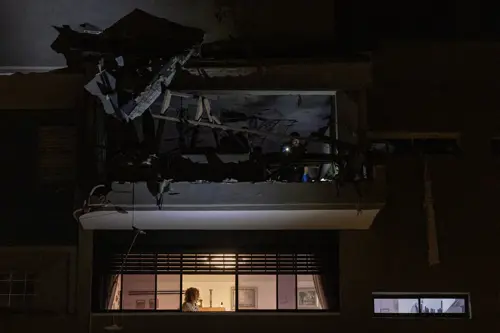
Tragically, the attack resulted in two civilian deaths, with additional civilians injured.
In the most recent attack last night, an Iranian cluster missile was launched and dispersed over central Israel. In Ramat Gan, a couple aged around 70, were killed whilst on their way to the shelter, whilst train stations both in Holon and Tel Aviv were significantly damaged, and additional civilians injured.
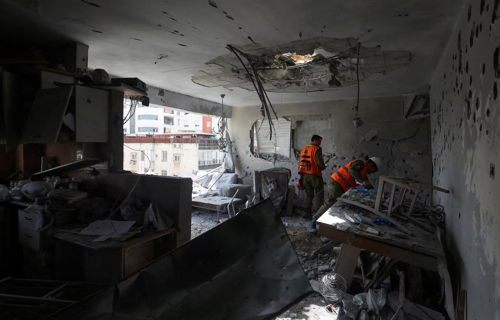
Beyond the immediate destruction, the danger does not end when the attack is over.
Once a missile’s warhead opens and disperses these explosives, they are extremely difficult to intercept. Even if missile defense systems detect the original missile, the dozens of smaller submunitions that scatter afterward are far harder to stop individually. This means that large areas can be affected simultaneously.
Some of the smaller explosives can fail to detonate on impact and remain on the ground as unexploded ordnance. These unexploded devices can remain active for long periods of time and may detonate if touched or disturbed.
Cluster munitions are held by law-abiding militaries and they have legitimate uses. Historically, militaries designed cluster munitions to strike multiple targets spread across a battlefield, like troops in open terrain. However, when these weapons are intentionally used against civilians in densely populated cities, the same wide-area effect that makes them effective on the battlefield now applies to innocent people.
The 2008 Convention on Cluster Munitions (CCM) bans cluster munitions for States that are party to it. Neither Israel nor Iran is a party to the Convention on Cluster Munitions, meaning they are not categorically banned from using cluster munitions. But even states that are not party to the convention must still comply with the laws of armed conflict, including the principles of distinction, proportionality and precautions in attack.
In other words, the decisive legal question is not regarding the weapon itself, but how it is used. The use of cluster munitions is not, in and of itself, a war crime. But intentionally targeting it at civilians, makes it one.
Iran is targeting civilians as a strategy. As part of that strategy, they use cluster missiles to make the impact site as strong as possible and target as many civilians as possible, as well as to terrorize the Israeli civilian population.
Conversely, Israel directs its attacks only at military objectives. Israel does not intentionally target civilians and takes extensive measures to minimize harm to civilians during military operations.
Iran’s deliberate use of cluster munitions against Israeli cities stands in stark contrast to these principles. As Operation Roaring Lion continues, Israel will remain committed to defending its population while operating in accordance with international law and the fundamental rules governing armed conflict.
