
Inside the Making of the IDF Submarine Corps
Deep under the surface lies one of the IDF’s most challenging and technical training tracks. Two commanders take us inside the submarine corps—its preparation, its people, and the demanding service that shapes them.
 08.12.25
 0
0
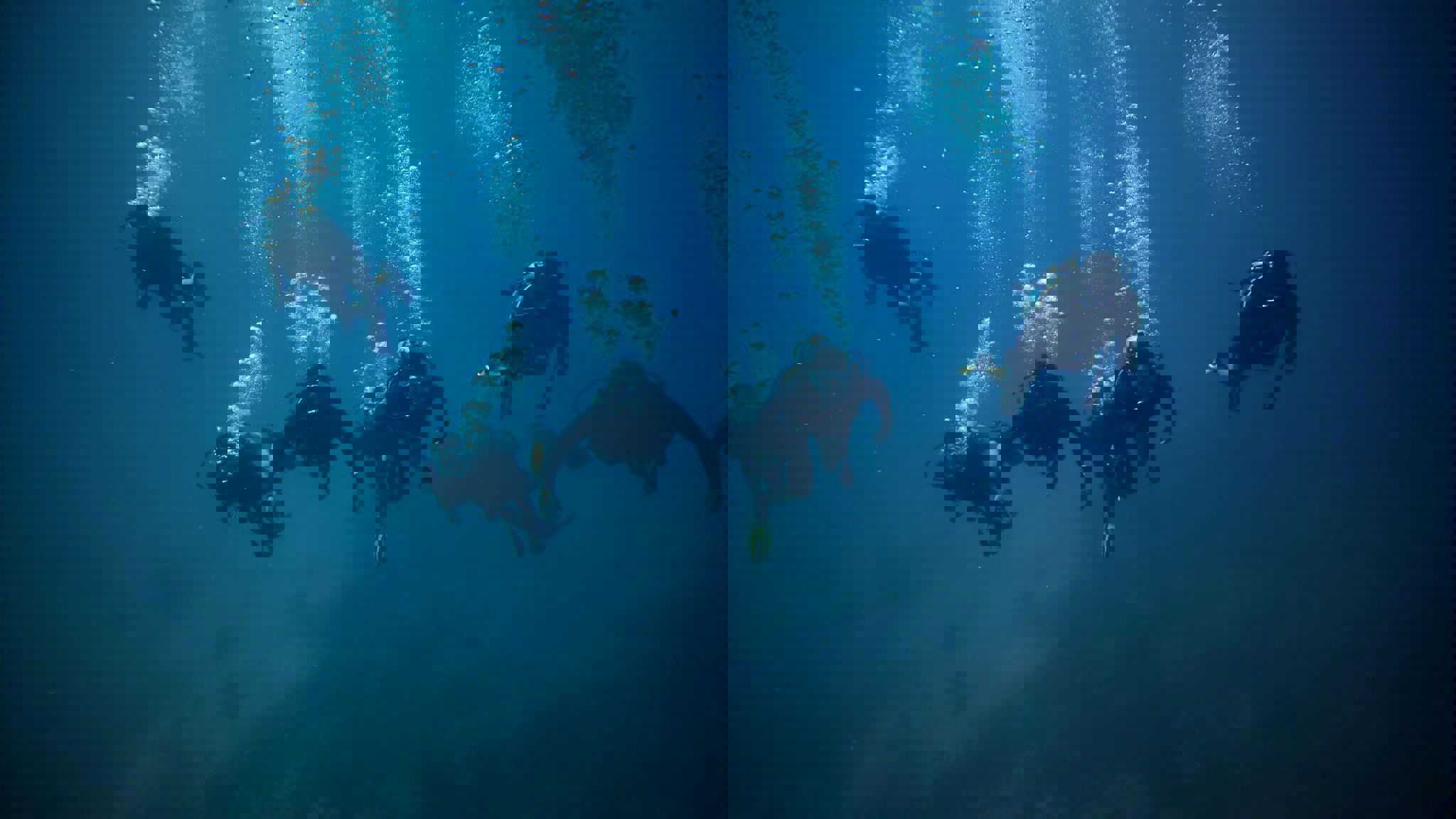
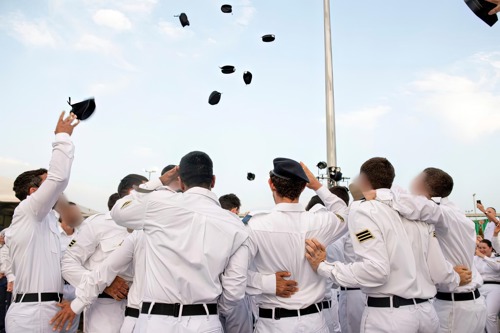
Diving into the great blue depths in essentially a large metal can is no easy feat. Doing it for the purpose of defending your country is even harder. As the new generation of submarine soldiers approaches the end of their training, their commanders are here to explain the journey on which they embarked to reach the concluding ceremony.

Submarine soldiers' mandatory service is longer than regular foot soldiers, a total of four years. Beginning with basic training of five weeks, the soldiers begin to prepare for the start of the submarine course which comes straight after this introductory phase. The course itself is a different story entirely.
“The start of the course focuses mostly on your physical capabilities, but overall it pushes you to your limits mentally and professionally as well,” begins Sergeant First Class S., commander of the current submarine course. “You have to learn how to deal with extreme situations, and study in unfriendly environments.”
As opposed to most combat training courses in the IDF, submarine soldiers are expected to retain a high level of information about the technicalities of the submarine, and therefore are tested regularly on their understanding of the material they are being taught.
Soldiers are required to train day and night, with little sleep, exercising hard and swimming extensively. They practice building their own rafts and boats, taking them out to sea and getting them to sail successfully. For two to three weeks, they are taken down to Eilat, the southernmost city in Israel, just to train for sailing. Here, the soldiers learn how to operate in boats, how to work together as a crew, under extremely intense and harsh conditions.
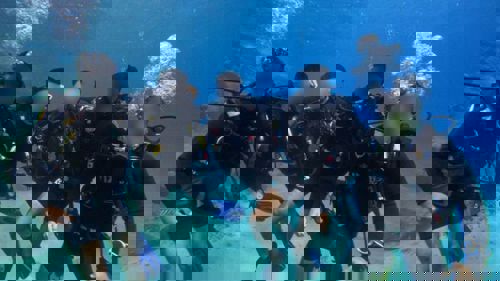
“I would say that's the most difficult part of training,” says SFC S.
After an intense six months, this marks the halfway point of the course. After this, the soldiers return to their base, and enter the second phase—specialization. From here on, the soldiers are divided according to profession, either technical or tactical positions. Within the technical department, soldiers train to be mechanics and electricians. On the tactical side are the weaponry department, mapping and navigation, and sonar roles.
This secondary phase consists of a lot of classroom time. Commanders act as teachers, guiding the soldiers to be the best operators they can be. The next part of this phase is joining the crews currently on board.
This stage arrives around ten weeks before the end of the course, and summarizes everything the soldiers have learnt and practiced over the past 14 months, before they officially qualify. After taking one final test, each one different according to the position the soldier holds in the submarine, the soldiers officially become qualified operators. But this final test does not prove easy.
“The tests are simulator tests. They have their own instructors, and you train for tens of hours, just to get to really know and recognize your position before you start the job. Sometimes you can do over 100 hours of training in those simulators.”
Considering the intensity of the course, not all soldiers make it through. There is a rigorous selection process which takes place to decide which soldiers can even enter the course to begin with, which usually ends up resulting in around 60 soldiers. Even with this, around half do not manage to continue on till the end.
“It’s not only the physical. This course pushes you to your mental limits. It's weeks on end, away from home, without phones, or proper sleep. You may be able to run the fastest, jump the highest, but if you're not good in class, or don't perform well under pressure? That's where people fall behind.”
“The first phase of training is physically more challenging, but the second stage is more demanding. But most people pull out in the first stage. By the time you reach the second, you've been selected for a specific role. You have more to lose. Nothing is set in stone of course, but one definitely feels more invested and connected in those last months.”
“I think it's more about how you get along with the people though. If you have support, and trust the people around you, you can make it through.”
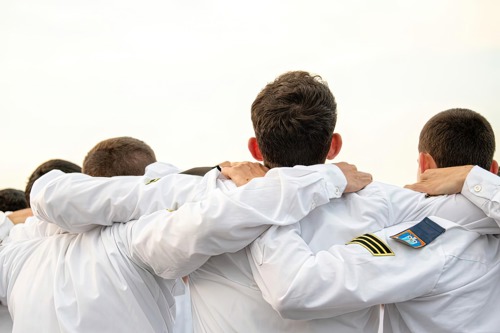
The crew is what holds the soldiers strong, as they can go for weeks with only each other to talk to. “You barely get a second to yourself,” says SFC E. “The people here are special. The connection you make with them is something you don't get in every other place in the army.”
These soldiers share everything together. In their first years aboard the submarines, they share not only their beds, but their sleeping hours too. The soldiers sleep sometimes two hours a night each, and then switch shifts with each other.
When asked how training has adapted with war, the commanders explained that training was less affected, but their service was dramatically intensified. The operational load expanded, and crews found themselves spending unprecedented stretches underwater. “We just have so much more work to do… it’s actually crazy,” says SFC S.
“Both of us were out at sea for extended periods of time,” adds SFC E. “They might say we’re going for three days, and then you come back after two and a half weeks.”
Life on board demands patience, resilience, and adaptability. With roughly 50 people sharing a confined space, even basic routines became logistical challenges. There are three toilets, one shower, and a shared understanding that water must be carefully rationed.
SFC E. reflects on his service with a quiet sense of pride. “Looking back,” he says, “we did huge things for the security of Israel. We’ve been to places I never imagined I would go.” Now, as an instructor shaping the next generation, he feels the weight and meaning of continuity. “I can see the impact I’m having on the new generation.”
For SFC S., returning as a commander was never a question but a calling. “Ever since I started the course, I knew I wanted to come back and be a commander,” he explains. “Training the next generation to be even better than we were—that’s the most meaningful thing you can do anywhere in the army.”
Together, the two often share stories from their service, offering lessons carved from real missions and real pressure. Each cohort, they believe, stands on the shoulders of the last. “Every generation will always be better than the previous one,” SFC S. says. “Each learns from the others’ mistakes.”
Beyond the classified missions and the long stretches at sea, both agree the Submarine Corps imparts something deeper: Resilience. The relentless study, the professionalism demanded at all hours, the ability to function on little sleep. These, they say, become life skills long after the uniform is folded away.
As SFC S. puts it, “We barely sleep, and still study and work professionally. It makes us strong-minded.” It is this mixture of discipline, humility, and purpose that they hope to pass on to every new soldier stepping into the hidden world beneath the waves.
