
Hezbollah’s Ali al-Taher Tunnel Complex: How Yahalom Dismantled Tunnels Built Over Decades
 18.10.26
 0
To learn more about the war on the northern front, click here.
Just 15 kilometers from the Israel-Lebanon border stood a strategic Hezbollah stronghold that took decades to construct. The Ali al-Taher Ridge, situated 600 meters north of Beaufort Castle and the Litani River, was recently dismantled by the IDF. Why was its location and network of tunnels so crucial to Hezbollah’s terrorist activities, and what made these tunnels unique?
Taking Control of The Ali al-Taher Ridge
Securing control of the ridge was a strategic operation that took months of planning and was part of a wider IDF effort to dismantle Hezbollah’s terrorism and all of its numerous Iranian-funded terror tunnels in southern Lebanon. The effort holds one ultimate goal: providing safety to Israeli communities living on the northern border.
The Ali al-Taher operation started roughly five months ago around the farther south Jabal Safi Ridge, where additional tunnel complexes were located. This operation was a team effort involving many IDF units: Golani, Givati, the 7th Brigade, the Commando Units (Egoz and Maglan) and Yahalom.
The terrain itself made the operation even more challenging. With only a few possible routes to the top, they had to navigate through dense vegetation, large boulders, booby traps, surveillance equipment and explosive drones planted by Hezbollah. On September 3rd, IDF troops reached the top and gained control of the Ali al-Taher ridge.
But reaching the ridge was just the beginning. Troops gradually gained control of positions above ground while simultaneously working to locate the tunnel entrances and cutting off Hezbollah’s ability to receive supplies and reinforcements. This included preventing food, water and fuel from reaching the terrorists hiding underground.
The Challenge of the Underground Tunnels
Taking control of the area above ground was just one part of the operation. The IDF still had to enter and clear Hezbollah’s massive underground tunnel network. This was an especially dangerous task for Yahalom (an elite unit) forces, who had to deal with the constant possibility of explosives, booby traps and dangerous gases hidden inside the tunnels.
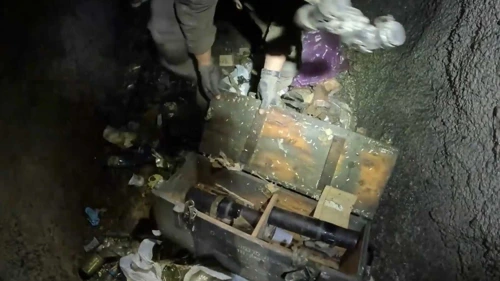
IDF troops inside the Ali al-Taher tunnels
Once inside, troops worked in constant coordination to clear the tunnels of Hezbollah terrorists and explosives before beginning a detailed examination of the underground complex. This included documenting the tunnels, collecting intelligence and extracting materials that could provide valuable information about Hezbollah’s operations.
Destroying such a large underground complex was no simple task. Yahalom’s engineering teams had to carefully examine the structure of the tunnels and prepare them for demolition.
After nearly three months of operations, IDF troops successfully entered and cleared two underground tunnel routes, gaining operational control both above and below the ridge. On September 10, the IDF dismantled Hezbollah’s underground complex, bringing an end to an operation that had taken months of coordinated efforts by numerous IDF units.
What was Found Inside the Tunnels?
Ali al-Taher was not an ordinary terror tunnel. It was an entire complex of two main tunnel routes used for a number of purposes.
Stretching over two kilometers, the tunnels contained: command facilities, an abundance of weapons and key positions intended for launching missiles and UAVs toward Israel.
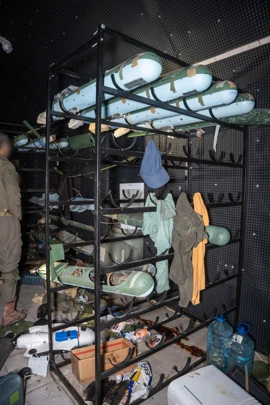
Items found inside the tunnels
IDF troops discovered extensive infrastructure designed to support prolonged military operations. The tunnels contained sleeping areas, kitchens, bathrooms and communications rooms.
“We repeatedly found rooms of similar sizes and designs,” CPT B. started. “It looked as though the same engineer or contractor had designed the different sections. It was almost like an apartment project where every apartment has the same basic layout.”
What was discovered beneath the Ali al-Taher ridge further proved the scale of Hezbollah’s underground military capabilities and exemplifies why the IDF must constantly thwart terrorism in the area.
What Made the Tunnels So Unique?
These tunnels weren’t built in a day. The type of terrain surrounding the tunnels, as well as the equipment found inside, suggests it was a project that took a couple of decades to complete.
CPT B. provides insight into why the tunnels were so difficult to construct:
“The tunnels required 10–20 years of digging. Some of the tunnels were still unfinished. They had been working on certain sections for more than 15 years and had still not completed them,” CPT B. detailed.
“The reason why it took so long to construct is because of how difficult it is to excavate underground in this area, remove all of the rock and gravel and dispose of it without exposing the project. It is a complicated process that takes a very long time.”
Beyond the excavation itself, it takes months or even years to install all the equipment inside the tunnels: “That includes moving weapons underground and installing ventilation systems, electricity and the different bunkers and rooms. So even after more than ten years of excavation, they needed more time to fully equip and prepare the infrastructure.”
Why Was the Complex so Important to Dismantle?
The Ali al-Taher Ridge is situated in a strategic military position. Standing approximately 600 meters above sea level, the ridge overlooks Nabatieh, one of Hezbollah’s major strongholds in southern Lebanon. Additionally, its location allowed Hezbollah to monitor important routes and protect its military positions farther north.
But the real danger wasn’t just the tactical advantage of the ridge itself. It was what Hezbollah had built underneath it.
The massive underground complex served as a command center for Hezbollah’s Badr Unit, which was responsible for military operations in the Nabatieh area. From these tunnels, Hezbollah terrorists could plan and coordinate attacks against IDF troops in southern Lebanon and Israeli communities across the northern border.
The tunnels also played an important role in transporting weapons supplied by the Iranian regime: “Weapons could be brought from Iran into the Nabatieh area and then be moved through Hezbollah’s underground infrastructure to military positions in the mountains. From there, terrorists could quickly bring weapons to the surface, launch attacks toward Israel and return underground before being located,” stated CPT B.
This network of tunnels was especially dangerous because of its proximity to Israeli communities.
The underground infrastructure was also connected to Hezbollah’s wider plans for a large-scale invasion of northern Israel, known as ‘Conquer the Galilee.’ These plans included infiltrating Israel and attempting to take control of communities and areas near the border.
Furthermore, the importance of this complex was also derived from the role the Iranian regime played in building it. “This was a very serious project, funded and designed with Iranian involvement.”
For the IDF, destroying this complex was not just about gaining control of another strategic position. It was about dismantling a major Hezbollah stronghold that had threatened Israeli communities for years: “The difference our operation made for the security of Israeli civilians is significant.”
Frequently Asked Questions
Where is the Ali al-Taher Ridge located?
Ali al-Taher Ridge is in southern Lebanon, approximately 15 kilometers from the Israel-Lebanon border. It is situated about 600 meters north of Beaufort Castle and the Litani River and overlooks the Nabatieh area.
What did the IDF discover inside the Ali al-Taher tunnels?
The underground complex contained two main tunnel routes extending over two kilometers. It included command facilities, weapons, positions intended for launching missiles and UAVs, sleeping areas, kitchens, bathrooms and communications rooms.
How long did it take Hezbollah to build the Ali al-Taher tunnel network?
Excavation took 10–20 years in some sections, with certain tunnels remaining unfinished after more than 15 years of work. Installing equipment and preparing the underground facilities required additional time.
Why was the Ali al-Taher Ridge strategically important to Hezbollah?
The ridge overlooked the Nabatieh area and provided a position from which Hezbollah could monitor important routes and support military positions farther north. The underground complex served as a command center for Hezbollah's Badr Unit and supported the movement and storage of weapons.
