
“My First Time Inside, I Felt Like I Couldn’t Breathe—I Cannot Imagine What Our Hostages Felt, Day After Day, Down There”
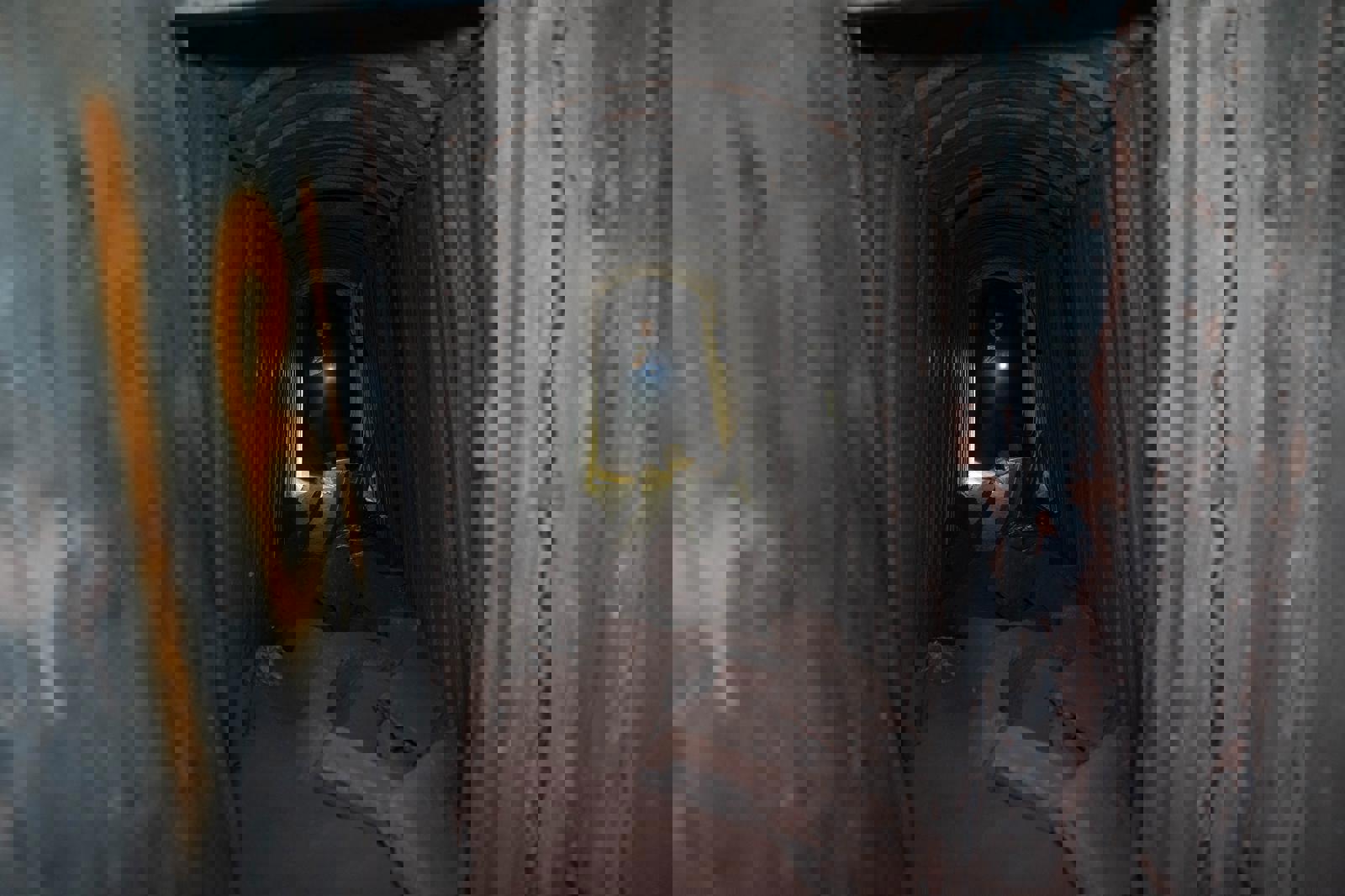
IDF spokeswoman walks through the White Sparrow tunnel, one of Hamas’ largest underground terror infrastructures, and prison for Lieutenant Hadar Goldin for over 11 years.
 22.12.25
 0
0
Just a few kilometers from Israeli soil, beneath the homes of Rafah, runs one of Hamas’s largest and most sinister underground terror networks. Carved deep into the earth, the tunnel stretches for approximately seven kilometers, plunging up to 25 meters below ground. What appears above it is a dense civilian neighborhood. What lies beneath is a carefully engineered system designed for war, concealment, and captivity.
In a crouched, back-breaking stance, Lt. B, an IDF spokeswoman, moves forward step by step through the narrow passageway. Every step is one a hostage took before her. This tunnel is where Lieutenant Hadar Goldin was held, murdered, and concealed by Hamas terrorists for more than 11 years.
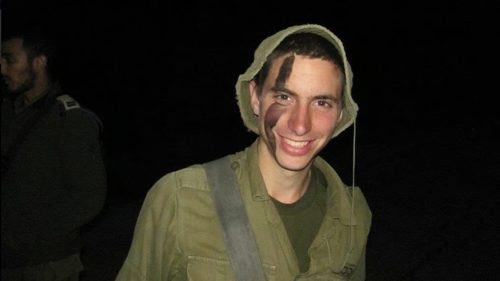
Known by the IDF as “White Sparrow,” the route is considered one of the most significant and complex tunnel networks uncovered to date. Its Hebrew name translates to Freedom of the Son, a tribute to the parents of Lieutenant Goldin.
Hadar Goldin, a 23-year-old Israel Defense Forces reconnaissance soldier, was killed just two hours into a ceasefire following the 2014 war between Israel and Hamas. His body was abducted and hidden underground, triggering more than a decade of efforts to locate and recover him.
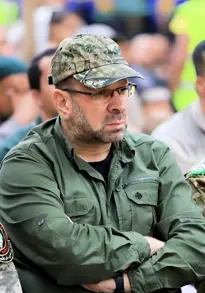
White Sparrow was not only a burial place; it was a command hub. This tunnel complex served as a base for Mohammed Sinwar, brother of October 7 massacre mastermind Yahya Sinwar. Mohammed Sinwar assumed leadership of Hamas following his brother’s death and was himself killed by the IDF in May this year at the age of 49.
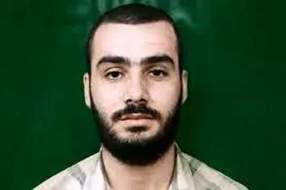
Muhammad Shabaneh, commander of Hamas’s Rafah Brigade, also operated from this network before being eliminated in an IDF strike. The tunnel contains approximately 80 hideouts and runs beneath a densely populated residential area near the Philadelphi Corridor bordering Egypt.
“We started at a point in southern Israel very close to the Gaza border,” Lt. B recalls. “We drove in with IDF soldiers in protected vehicles. As we entered the tunnel area, it became very clear we were in a civilian neighborhood in Rafah.”
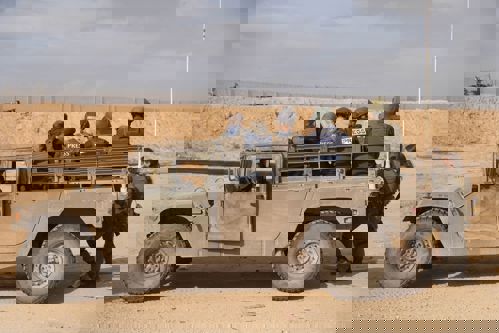
She describes how the tunnel ran directly beneath civilian infrastructure. “We were between an UNRWA building and a mosque. Forces in the area confirmed the tunnel passed underneath both. It shows how terror infrastructure was deliberately embedded beneath civilian buildings, UNRWA facilities, and places of worship included.”
The entrance itself was carefully concealed, buried deep underground and sanded over to blend into its surroundings. Everything above ground appeared civilian. To locate it, IDF forces were forced to dig deep beneath what looked like an ordinary neighborhood.
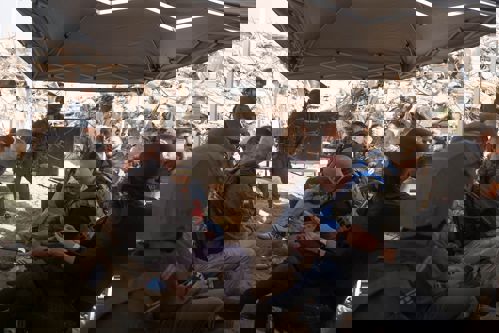
Walking into the tunnel was, in Lt. B’s words, surreal. “It was extremely scary. It didn’t feel like real life,” she says. “You had to get down on your knees just to enter. Only after a few seconds could you half-stand. You felt like the air was thinning out and you couldn’t really breathe, the space tightening every second.”
Yet alongside the claustrophobia is the chilling evidence of permanence: cement-reinforced walls, metal rails, electrical wiring, and rooms branching off the main route, complete with mattresses, food supplies, clothing, water bottles, and notebooks.
“This wasn’t built in a day,” she says. “It was complex. Different routes, different rooms, different hideouts. This took a very long time to construct.”
The scale of the operation underscores what Israeli officials have long explained: that Hamas diverted vast sums intended for civilian development into military infrastructure. The complexity of the tunnels reflects meticulous planning and millions of dollars that could have been used to build a functioning civilian society in Gaza.
LTC Nadav Shoshani, IDF spokesperson, is blunt: “It was built with funds intended for Gazan civilians. Concrete brought into Gaza for civilian projects was used for terror purposes, to hold hostages and conduct attacks.”
The IDF began operating in this tunnel in June 2024. While it no longer shows signs of immediate operational use, Hamas’ presence lingers. Belongings remain scattered throughout, flags, bags, clothing, bedding, evidence of lives lived underground. “Walking through it was frightening,” Lt. B admits. “The air felt like it was running out. And I couldn’t stop thinking about the hostages held in places like this for hundreds of days.”
“These are not living conditions,” she says. “No light. No air. You can’t straighten your legs or stretch your body. You’re confined completely.”
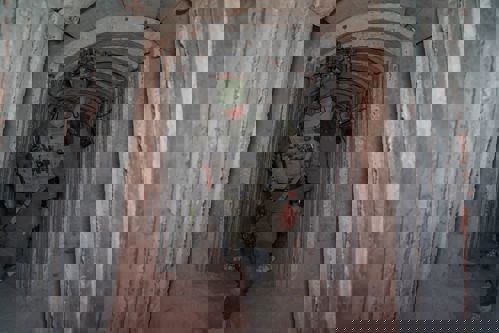
Asked what goes through her mind knowing Hadar Goldin was held here for over a decade, her answer is measured but devastating. “You see how IDF soldiers were trained to search everywhere,” she says. “They were trained to look for parts of his body, as horrible as that sounds. Pieces of feet, arms, ligaments. Anything identifiable.”
Throughout the tunnel, metal blast doors had been installed, deliberately designed to slow troops, obstruct access, and keep Goldin hidden. “It shows how hard they worked to keep him from us,” she adds. “How thought out this tunnel really was.”
But Hadar Goldin was not alone. Live hostages were held in similar tunnels for months on end during the war. Some were confined in cages. Some were sexually assaulted in cramped chambers like these. Bodies of murdered captives were later recovered with curved spines, deformed after being unable to stand upright for more than a year. Hostages described watching Hamas terrorists eat food stolen from humanitarian aid meant for civilians, while captives were deprived of water, sanitation, and medical care.
“My first time inside,” Lt. B recalls, “I started getting nervous. I felt like I couldn’t breathe.” She pauses. “I cannot imagine what our hostages felt, day after day, down there. Especially while the war was happening above their heads.”
Above ground, Rafah looks like a civilian neighborhood. Below it, White Sparrow tells a different story. It is a testament to calculated cruelty, years of preparation, and a system built not for survival, but for suffering.
The IDF will continue operating to dismantle Hamas entirely, including their terror network, no matter how much digging or searching or fighting they must endure. No soldier will rest until our last hostage, SFC Ran Gvili, is home, and our civilians are protected within our borders.
