
The Puppeteers of Terror in the Middle East
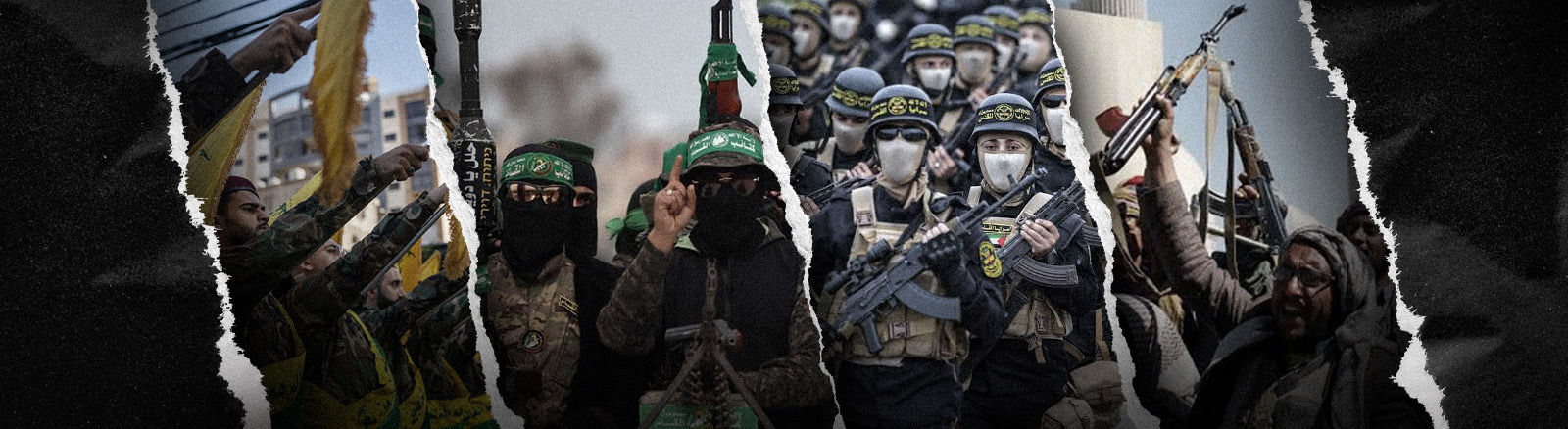
Iran doesn’t fight alone — it fights through proxies. From Gaza to Lebanon, Yemen to Syria, this is the network Tehran built to surround Israel and spread terror across the region.
 05.03.26
 0
0
The Iranian regime has long been at the center of an axis responsible for terrorist attacks against Israel, extending far beyond the events of October 7. Seeking to spread its ideology across the globe, the IRGC has built a network of proxies to enforce its radical agenda.
Their goal is simple: to encircle Israel on all sides, a full 360 degrees, with enemies committed to its destruction.
Their puppets operate in many countries around the region, bending at the will of the powerhouse that is Iran. These groups act as extensions of the IRGC, following its directives and advancing its interests.
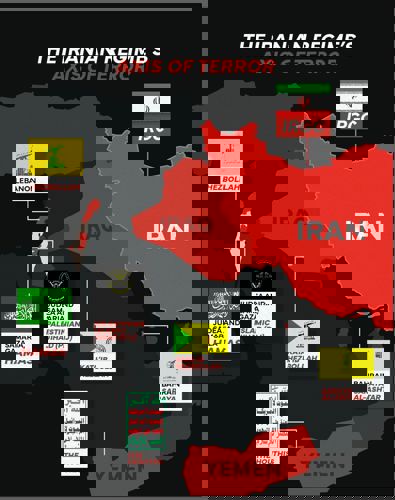
Hamas, Hezbollah, the Houthis and various Shi’ite militias are all armed, funded and trained by the Iranian regime, a pattern that has persisted for years, allowing Iran to project power and influence far beyond its own borders.
The backbone of this system is the Iranian Revolutionary Guard Corps (IRGC), particularly its Quds Force, which manages Iran’s operations abroad and oversees its proxy groups. Through these proxies, Iran spreads its ideology, exerts political influence, and coordinates attacks while keeping its own forces at a safe distance.
Hezbollah, based in Lebanon, is one of Iran’s most powerful proxies. Supported from its founding in 1982, Hezbollah has received weapons, training and hundreds of millions of dollars over decades.
This support allowed it to become one of the most heavily armed militias in the Middle East. Iran has helped Hezbollah build underground precision-guided missile production sites beneath civilian buildings to enable targeted attacks on Israeli civilians and strategic targets.
This venture has gone so far that precision guided missiles manufacturing centers operate underneath civilian residential buildings in the heart of Beirut, Lebanon. In addition, during Operation Northern Shield, the IDF exposed Hezbollah terror tunnels dug from southern Lebanon into northern Israel.
Hezbollah has carried out bombings and kidnappings, fired rockets at Israeli civilians, started multiple wars with Israel, and built underground terror infrastructure and tunnels from Lebanon into Israel, all in Iran’s name.
When it comes to Hamas in Gaza, although they are a Sunni organization, Hamas’ location in Gaza and its proximity to Israel makes it an ideal ally, and proxy, for Iran.
In Gaza, Iran provides Hamas with millions of dollars a year as well as rockets, anti-tank missiles, and other weapons. Despite Hamas’ responsibility over the civilian population of Gaza, most of the money provided by Iran goes to funding terror attacks and operations against Israel, instead of helping Palestinian civilians.
Iranian training and operational support have helped Hamas build its military infrastructure and plan large-scale attacks, including the October 7, 2023 assault on Israel, which killed over 1,200 people and took hundreds hostage.
The Palestinian Islamic Jihad (PIJ) is another terrorist organization founded in Gaza, with the longest and closest ties to Iran. Founded in 1981, PIJ was heavily inspired by the Islamic Revolution in Iran. PIJ’s relationship with Iran was strengthened in the late 1980s, after the group’s leadership moved from Egypt to Lebanon, where Hezbollah was already based.
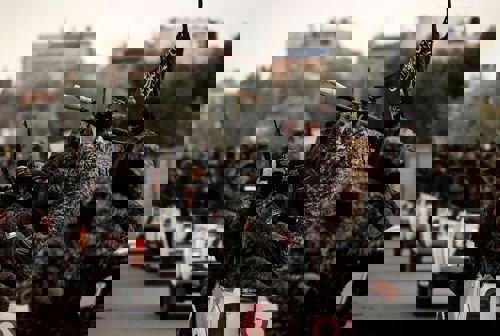
There, PIJ cultivated a partnership with the IRGC and Hezbollah, which provided it with training and arms. They also operate within Judea and Samaria, where multiple Israeli civilians have been murdered in their brutal terror attacks.
Today, Iran continues to supply PIJ with weapons and approximately $70 million annually in funding which have been and continue to be used to target Israeli civilians through various terror attacks and operations.
Iran’s reach extends beyond Lebanon and Gaza. In 2014, when Yemen was at its most unstable, Iran took the opportunity to entrench itself into the country, and funded the Houthi’s. In Yemen, the IRGC backs the Houthi movement with missiles, drones and combat training.
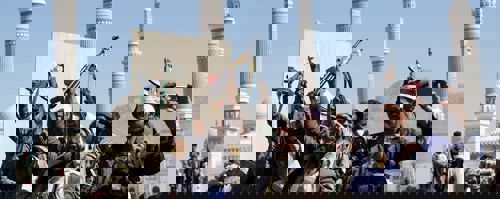
After the October 7 massacre, the Houthis rallied behind Hamas as an excuse to get involved in destabilizing the West. The Houthis have attacked multiple international ships sailing through the Red Sea, and have launched ballistic missiles at Israel relentlessly from over 1,000 miles away.
In Syria and Iraq, Iran supports Shiite militias and deploys IRGC forces to fight in conflicts and secure supply routes for weapons into Lebanon. Iran has directly entrenched itself in Syria where the IRGC Quds Force and the Iranian regime maintain significant influence over the political and military actions of Syria.
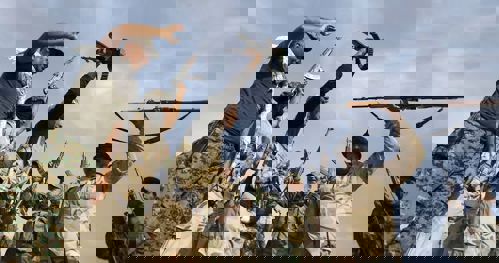
This network allows Iran to operate across multiple countries and maintain strategic control in the region.
A key part of Iran’s strategy is the flow of weapons and funding. The IRGC uses secret shipping routes and financial networks, often through intermediaries, to ensure its proxies remain armed and ready. Hezbollah, Hamas, the Houthis, and other Iran-backed groups rely on this support to carry out attacks, many of which target Israeli civilians and strategic sites.
The result is a persistent and coordinated threat. Every major attack against Israel in recent years, from rocket and drone barrages to cross-border assaults, can be traced back to Iranian funding, weapons and training. Iran’s proxies act as the frontline of its regional agenda, carrying out its goals while shielding Tehran from direct confrontation.
This network is the product of decades of careful planning. By funding, arming, and coordinating its proxies, Iran has built a powerful axis capable of attacking Israel, destabilizing the region and spreading its ideology beyond the Middle East. Recognizing and understanding this network is essential for Israel and its allies to respond effectively and protect civilians.
