
Iran is Recruiting Children Into the War
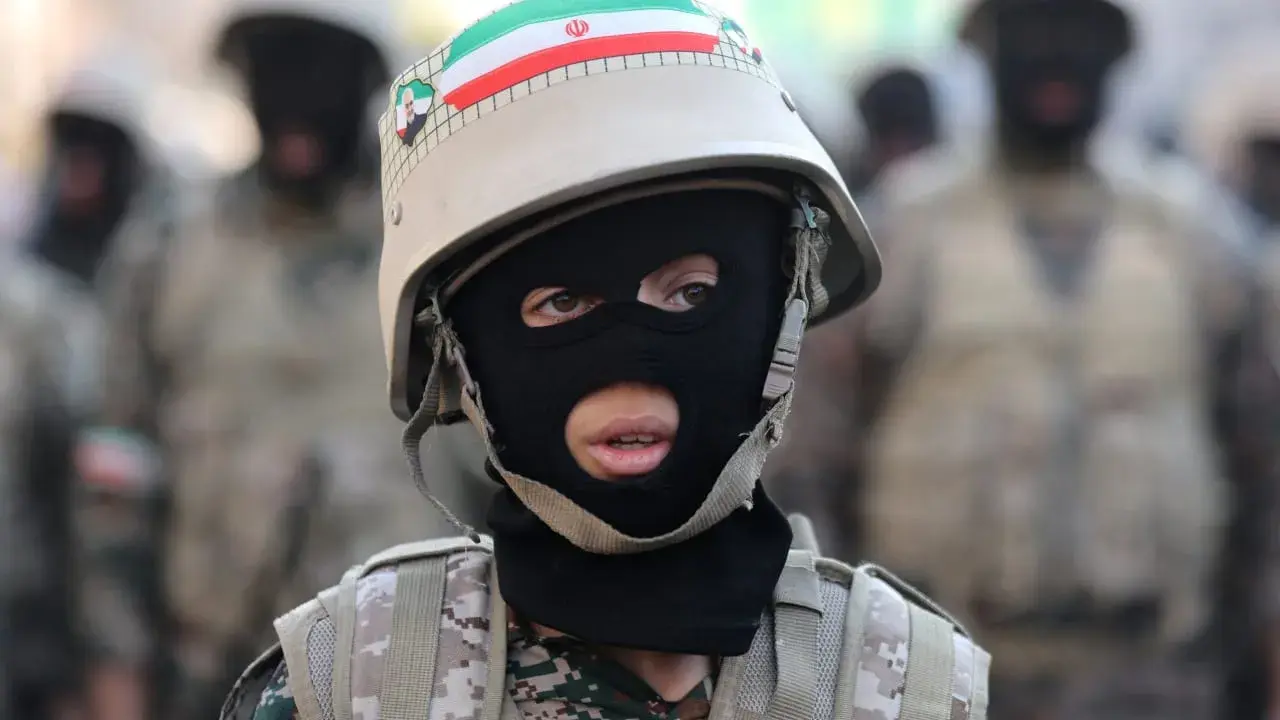
The Iranian regime is recruiting children into the Basij and placing them on the front lines, exposing a systematic strategy of using civilians, including minors, to sustain its war effort under mounting military pressure.
 06.04.26
 0
0
In recent weeks, as IDF operations have expanded across Iran, a clearer picture has begun to emerge of how the Iranian regime is operating under sustained military pressure.
One of the most alarming developments is the recruitment of minors into the Basij, a paramilitary force operating under the Islamic Revolutionary Guard Corps (IRGC). This is not speculation. It is an openly declared policy.
On March 26, 2026, Rahim Nadali, a deputy in the IRGC Mohammad Rasoul Allah Corps of Greater Tehran, announced a recruitment campaign titled “Homeland-Defending Combatants for Iran.” The campaign explicitly invited volunteers aged 12 and above, with registration taking place through Basij bases operating out of mosques across Tehran.
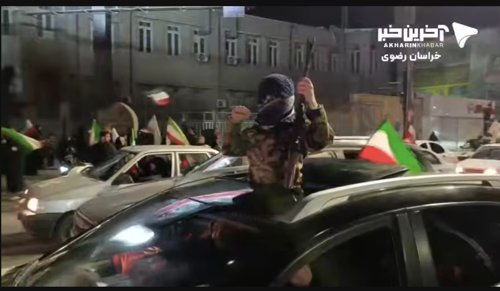
Since then, multiple reports from media and human rights organizations have documented eyewitness accounts and audiovisual evidence showing minors deployed at IRGC checkpoints and patrols, armed with weapons, including AK-47 pattern rifles.
This is not incidental, nor is it a fringe tactic. It is a deliberate decision by the regime to integrate children into its security and military infrastructure.
As Operation Roaring Lion has progressed, targeting military infrastructure, command networks, and weapons production, it has also exposed how the regime is attempting to sustain its war effort. The use of child soldiers is part of that reality.
This practice constitutes a direct violation of international law. It also reflects a broader pattern: a willingness by the Iranian regime to erase the distinction between civilian and combatant when it serves its strategic interests.
This pattern is not new. For years, Iran has built its model of warfare around a consistent principle–blurring the line between civilian and combatant whenever it provides a strategic advantage.
This has been demonstrated repeatedly across the region. In Lebanon, through Hezbollah. In Yemen, through the Houthis. In Syria, through IRGC-backed militias embedded within civilian areas. In Gaza, through Hamas and Islamic Jihad. In each case, Iran has supported forces that operate within civilian environments, prolong conflict, and increase the risk and cost to noncombatants.
The recruitment of minors inside Iran fits directly into this pattern. It reflects a willingness to draw from the civilian population, including children, in order to maintain control and expand military capacity under pressure. Following significant operational blows by the IDF and U.S. Armed Forces, the regime is attempting to compensate by widening its recruitment base at any cost. Unless met with clear and sustained international condemnation, this practice will continue.
As UNICEF has stated, “the recruitment and use of children by armed forces or groups is a grave violation of children’s rights.”
Despite the challenges created by Iran’s conduct, the legal framework governing armed conflict remains clear. The IDF operates in accordance with international law and adheres to the principles of distinction, proportionality, and precaution. It targets lawful military objectives such as missile launchers, command centers, and weapons production sites, while incorporating measures to mitigate civilian harm, including the selection of munitions, timing of strikes, and advance warnings where feasible.
Operations remain ongoing. Senior operatives have been eliminated, weapons production capabilities degraded, and strategic infrastructure targeted.
This stands in stark contrast to the regime’s conduct: the deliberate placement of minors within military roles and operational environments.
Iran’s approach to warfare is consistent. Its primary objective is regime survival, not the protection of its civilian population. The deliberate use of child soldiers, the embedding of military assets within civilian environments, and the targeting of civilian population centers all reflect this reality.
Responsibility lies with the party that creates these conditions.
Failing to center accountability on the Iranian regime distorts the operational and moral reality. For the sake of preserving both legal clarity and moral responsibility, the international community cannot turn a blind eye.
