
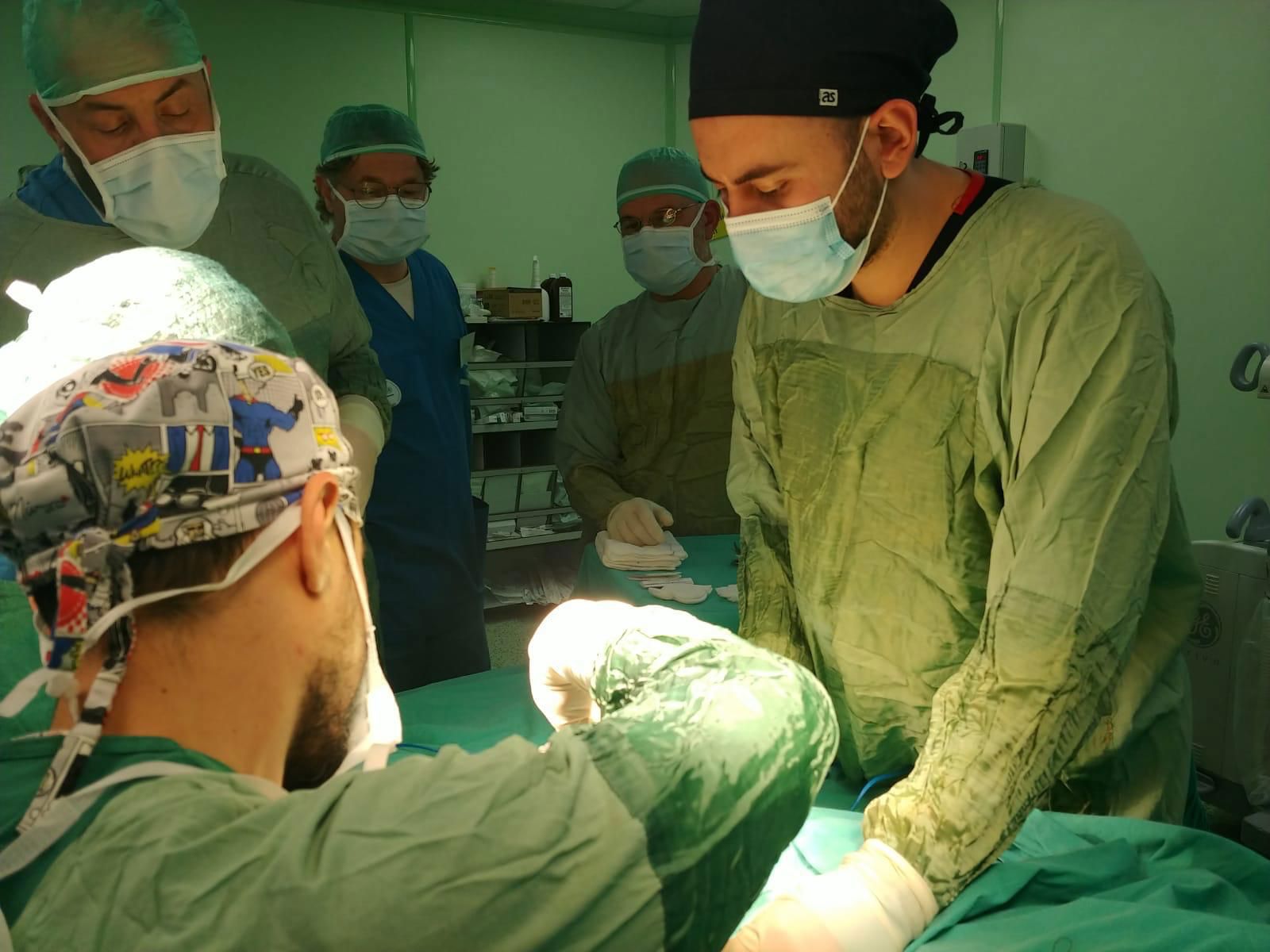
The IDF Unit Providing Medical Aid Beyond the Border
 19.08.26
 0
0
During routine times, when the IDF Field Hospital Unit is not active, its equipment lies in sealed crates in a warehouse in Israel. An emergency room, an intensive care unit, a laboratory and a pharmacy all lie in wait for when they are needed most.
When tragedy strikes, IDF reservists who are medical workers in their day-to-day lives rush to the warehouse, duffel bags at hand, ready to leave their homes and country to help people in need wherever duty calls.
Lieutenant Colonel Dr. M., an emergency medicine physician, has taken part in these humanitarian missions firsthand and now helps prepare the next generation of emergency medical personnel as head of the academic branch in the Operational Medicine Division of the IDF Medical Corps.
“I had the privilege of participating in two missions that the IDF took part in, one in Equatorial Guinea and the other in Turkiye. When the disasters happened, there was a call out for help. So it's part volunteering and part a call to arms,” he described.
How the Field Hospital Responds to Disasters
As a volunteer on the IDF humanitarian aid delegations, LTC Dr. M. helped manage missions and coordinate among different teams, while other volunteers set up the field hospital, recognized by the WHO in 2016 as the first Type 3 Emergency Medical Team in the world.
“It is the highest classification of a field hospital, meaning it supports full inpatient surgical and intensive care capabilities. It was, at the time, one of only two anywhere in the world.” The unit earned its high classification through experience in the field, all across the world.
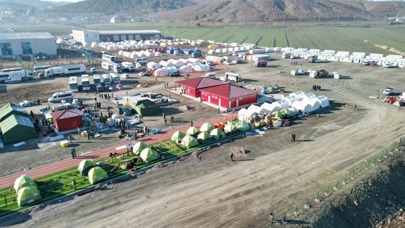
The field hospital set up in Turkiye, following the 2023 earthquake
Even though the field hospital might not be as advanced as permanent infrastructure, in these disasters, time is of the essence. The field hospital might be the quickest way to deliver fitting medical aid where needed. “It can take a lot of time to transport and set up the facility, but we have learned how to mobilize quickly, it’s one of our benefits. It is why we gained our good reputation in the field of humanitarian aid—we know how to manage our equipment and get where we need to quickly.”
The IDF Field Hospital Mission in Turkiye
Sometimes the best course of action is to make use of existing infrastructure. During the mission to Turkiye in 2023, for example, the unit reopened a hospital that had been almost completely abandoned and evacuated during the devastating earthquake that struck the area. “It had electricity, but no water and no staff. We went in, cleaned it, restocked it, and within forty-eight hours, its original ED was receiving Turkish ambulances again.”
“When we operate in a familiar hospital, we reduce the need for decision-making on the ground and ensure people know where to go,” he explained. “We worked with the Turkish staff to enhance their capabilities.”
Some of the local staff were themselves affected by the earthquake, or were fearful of the hospital building collapsing in an aftershock. The delegation helped reassure them that the building was safe, thanks to a team of engineers from the Home Front Command that inspected the building.
IDF Field Hospital personnel with a patient, Turkiye 2023
“The assessment not only allowed us to operate within the hospital, but also helped the Turkish staff to feel more confident and to be able to take responsibility back in a very short time. We tried to be humble and wherever we felt it's not detrimental to the patients and casualties, we let them take the lead.”
Saving Lives Across the Border
When lives are on the line, and something as universal as health and well-being is at stake, LTC Dr. M. learned that people could get together and work together for a shared cause, despite cultural and professional differences.
Humanitarian volunteer work may also come at a personal cost to the individual delegation members, such as catching a disease or being caught in the aftershocks of natural disasters. Yet, it doesn’t deter the IDF reservists from helping when they are needed:
“We, as medical personnel, do it out of love for our field. For military medical officers or paramedical officers, it's even more prominent because we know we might find ourselves on the battlefield risking our lives to save others. In our core, we want to help and heal people.”
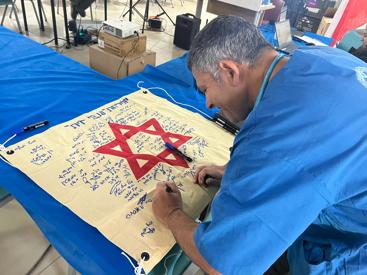
IDF Field Hospital member, Turkiye 2023
That philosophy extends to humanitarian missions too. “We take risks to save other people, in civilian settings, on humanitarian missions far from home. To us, a patient is a patient. Doesn't matter their nationality, their religion, their gender or where they come from. If they're suffering and need help, we will be there to relieve the suffering and get them better.”
Why the IDF Sends Medical Teams Abroad
Systematically, the IDF sends these delegations for 3 main reasons. “Firstly, there is an ethical commitment to save lives. Beyond that, we do it to prepare us for if a similar disaster happens here in our country, and to strengthen our international relationships.”
The first humanitarian aid operation that the IDF carried out was in 1953, when Israeli Navy ships helped the survivors of an earthquake in Greece and gave them the necessary medical treatment they needed. These sailors paved the way for over 30 future IDF humanitarian aid missions.
“Throughout all of these missions, we can see that it doesn't matter what the circumstances are or what the challenges are—the IDF's values are strong and present throughout the missions,” concluded LTC Dr. M..
“Our missions start from a phone call, a hangar, a cargo plane. But what makes that possible isn't the equipment in the crates, it's the people who trained for years so that when the call comes, they can say yes. And now, in the academic branch, we are making sure that when the next call comes, the people are ready.”
Frequently Asked Questions
What is the IDF Field Hospital?
It is a mobile medical facility that includes an emergency room, intensive care unit, laboratory and pharmacy. It has been recognized as a Type 3 Emergency Medical Team, supporting inpatient surgical and intensive care capabilities.
How did the IDF Field Hospital help in Turkiye after the 2023 earthquake?
The IDF delegation reopened a nearly abandoned hospital, cleaned and restocked it, and restored its emergency department to receive Turkish ambulances within 48 hours.
Why does the IDF send medical teams abroad?
There are 3 main reasons why the IDF sends medical teams abroad: an ethical commitment to saving lives, preparation for a similar disaster in Israel and strengthening international relationships.
When did the IDF first provide humanitarian medical aid abroad?
The first IDF humanitarian aid operation took place in 1953, when Israeli Navy ships assisted survivors of an earthquake in Greece and provided medical treatment.
What makes the IDF Field Hospital able to respond quickly to disasters?
The unit has developed experience in mobilizing and managing its equipment in disaster zones. Its personnel train so they can deploy quickly when a call for assistance comes.
